
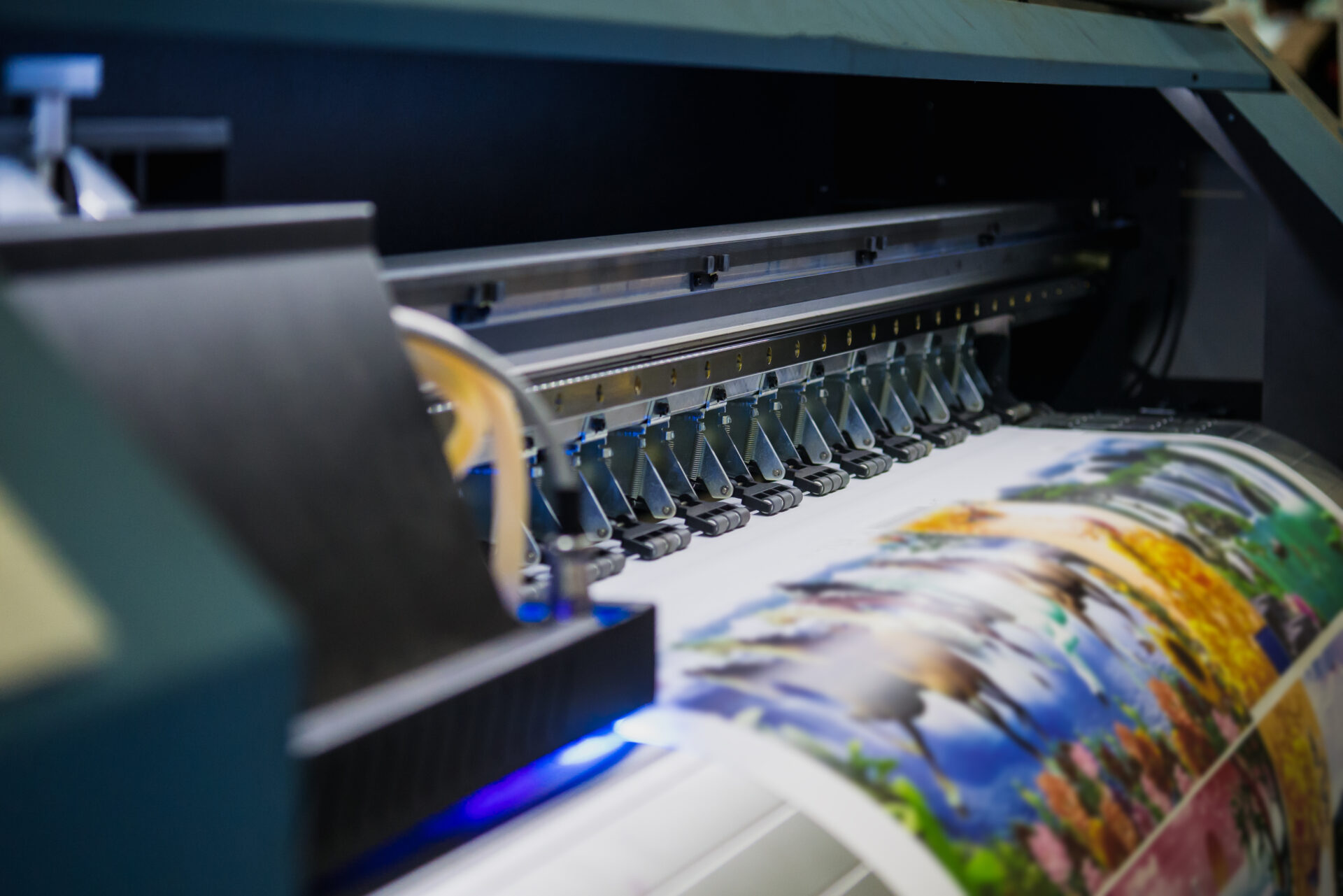
Print-on-demand (POD) is a business model in which products are printed and fulfilled only after an order is made. There is minimal inventory risk, and the practice is more sustainable than bulk manufacturing.
We live in an era of individual expression and personalized experiences, and as a result, the print-on-demand market is booming.
This article will walk you through major market stats and trends and what they mean for you—either as a customer or a creator who wants to make use of POD services.
Print-on-Demand Market Growth
The global print-on-demand market was valued at USD $9.89 billion in 2024. It is projected to reach USD $12.39 billion in 2025.
By 2033, the market is expected to reach USD $75.30 billion, following a compound annual growth rate (CAGR) of 25.3%. According to other data, such as a report from Grand View Research, the CAGR is between 23% and 25%.
Every month, the average search volume for “print-on-demand” is close to 133,000 worldwide, according to Semrush.
Key drivers of POD growth include a growing preference for unique products and greater internet and smartphone use.
POD offers opportunities for service providers, creators, and buyers alike. Providers often handle printing and shipping, completing the entire fulfillment service.
Platforms like Lumaprints let customers easily set up online shops and create customized products with minimal investment. Since items are printed on demand, no inventory is needed.
Lumaprints’ canvas prints, metal prints, and fine art paper prints are part of this growth wave, offering you the chance to grow with an established and still-evolving platform.
The Print-on-Demand Industry in North America
According to results on Semrush, more than 33% of the “print-on-demand” keyword search volume comes from the U.S. This isn’t surprising—several reports state that North America is the main shareholder in the global POD market.
The U.S. print-on-demand market size was estimated at USD $2.53 billion in 2024. It is forecasted to follow a CAGR of 26.69%, which means it will be worth nearly USD $27 billion by 2034.
The main factors driving this growth rate are production facilities, consistent economic growth, and technological infrastructure. A significant number of the most profitable POD companies in the world are based in the U.S.
The biggest companies with global headquarters all have fulfillment centers in North America. In fact, around 75% of the most lucrative POD businesses are run from the U.S.
What Is the Demand for Customized Products in the POD Market?
Consumer preferences are changing. Nowadays, people prefer to give custom-made and personalized products as gifts. They also like to express their individuality and personality through their apparel and home decor.
Personalization is no longer a luxury. In fact, 81% of consumers say their preference is for companies that offer personalized products and experiences.
The home decor category is anticipated to have the greatest annual growth rate of 28%. This includes a variety of items, including pillows, mugs, and canvas prints.
Two trends drive this growth: More people are working from home and want cozier spaces, and an increasing number of small businesses are using POD for its low costs and accessibility.
Over 60% POD customers prefer buying from small brands. This means that unique products already have an edge over mass-produced designs.
Profit Margins in the Print-on-Demand Industry
The average POD product profit margin is 20%. Most online sellers develop a successful business with this profit margin. This provides a good middle ground—they can offer reasonably priced products while still generating a profit from their business.
However, some sellers report profit margins of up to 60%—it all depends on the niche, product, and target audience.
Although it may seem advantageous to have higher profit margins, it’s important to understand that pricing strategy depends on the products.
For example, non-clothing products, like wall art, tend to have a higher profit margin than apparel. Research has shown that the typical margin for apparel is up to 40%, while mugs, candles, and art prints can have markups of up to a whopping 76%.
How Technology Has Advanced the POD Market
The rise of POD is, to a large extent, the result of fast technological advancements. Digital printing dominates the market due to its affordability, versatility, and high-quality results. Even so, offset printing is still relevant, especially because it maintains quality in high-volume print jobs.
Additionally, digital tools make it easier to upload and preview designs, as well as automate printing and fulfillment.
Another technological advancement changing the print-on-demand market is AI. AI enables advanced data analysis techniques, so it can help improve the manufacturing process and find high-demand products based on customer behavior.
Sustainable Practices in the Print-on-Demand Industry
One of the primary advantages of POD is less waste compared to classic manufacturing. In traditional manufacturing, products are created in bulk before sale. In POD, products are made after the sale.
That means reduced risk, and because there’s no inventory waste, the print-on-demand market allows businesses to also reduce their environmental impact. They can further improve it by using eco-friendly materials and energy-efficient technologies for production.
This strategy not only has a positive impact on the environment, but it also allows businesses to succeed in an environmentally conscious market.
And this market isn’t just a small niche—in fact, 80% of consumers say they are willing to spend around 10% more for sustainable products.
Conclusion
The print-on-demand market shows a significant growth wave, which is expected to continue into the next decade. There is a high demand for personalized and customized items.
POD is inherently sustainable, as the products are made only after sales. Also, it’s a low-risk opportunity, which doesn’t require big investments to start.
Home decor is one of the fastest-growing niches, providing some of the best profit margins. If you’re thinking about offering custom prints, learn more about POD options at Lumaprints, because now is a great time to start.
About the Author
Sara Popovic
Sara is a writer and illustrator who likes to dabble in web and graphic design, as well as handcrafting. She loves exploring various ways to create, present and market art.
Sara has worked on several ecommerce projects in the past, including Etsy and Fabletics. What drives her to create content in this industry is helping people build their own creative projects and turn their passion into a living.






nice info love it