
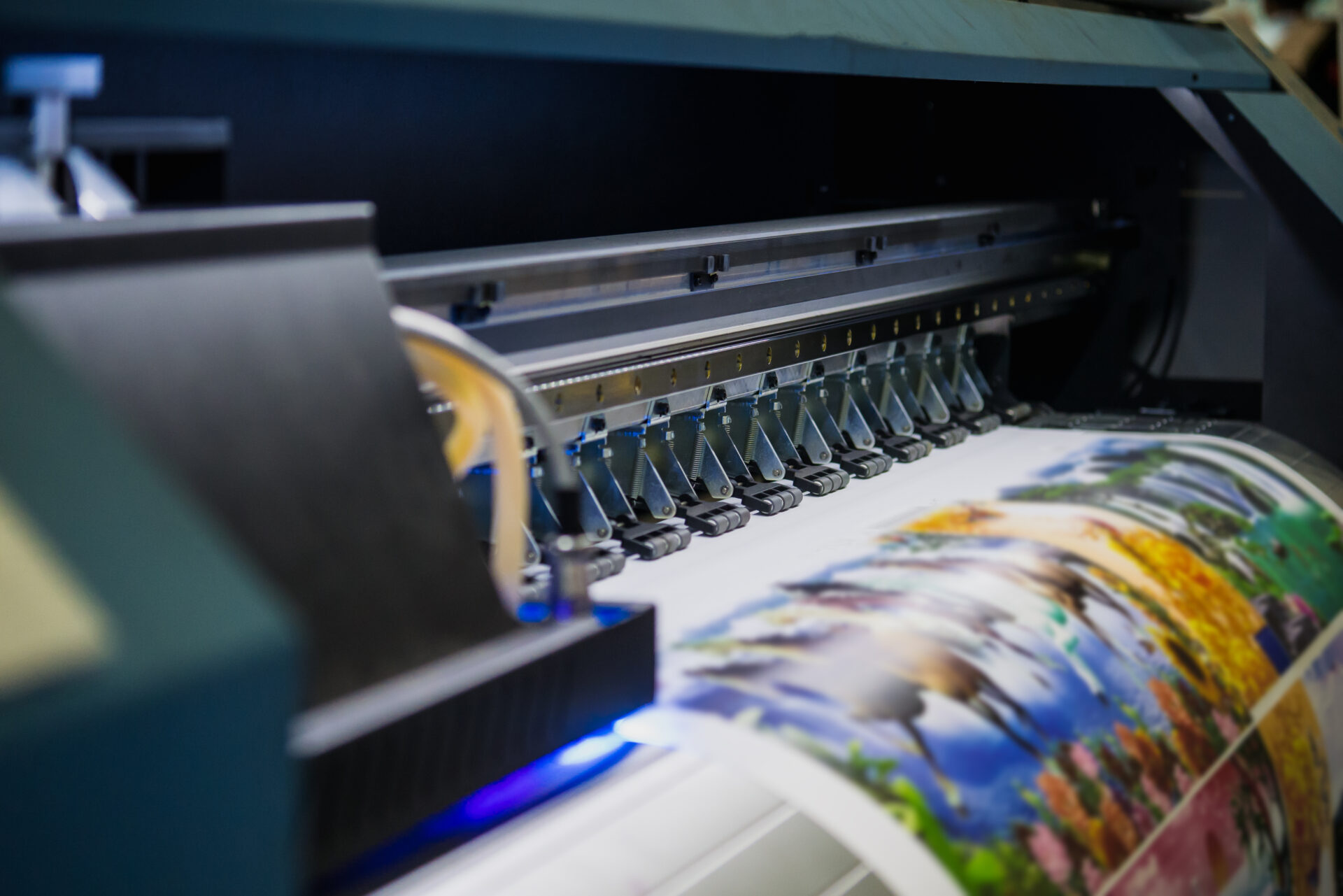
Print on demand has moved well beyond being a side-business model for T-shirts and novelty products. Artists, photographers, designers, and ecommerce sellers now use POD for everything from apparel to wall art, books, accessories, and personalized home décor.
The basic idea is still simple: a product is made after the customer orders it. There is no need to fill a warehouse with finished stock and hope it eventually sells.
What has changed is the scale of the market.
Recent print on demand statistics point to continued growth as ecommerce, personalization, digital printing, and automated fulfillment become more closely connected. For creators, the useful question is not simply how large the industry may become, but what those numbers reveal about where customer demand is heading.
This article looks at the latest market estimates, important print on demand trends, and what they could mean for creators building a POD business.
Print-on-Demand Market Growth
Market research firms continue to forecast strong growth, although their estimates vary depending on how they define the print-on-demand industry.
Grand View Research estimates that the global market was worth approximately $10.8 billion in 2025 and could reach $13.1 billion in 2026. Its forecast puts the market at about $57.5 billion by 2033, representing a compound annual growth rate of 23.6% from 2026 through 2033.
Precedence Research uses a broader estimate. Its August 2026 report values the market at $12.96 billion in 2025 and projects it could reach approximately $118.85 billion by 2035, with a CAGR of 24.81%.
Those figures should not be treated as exact predictions. Research companies use different methodologies, categories, and forecast periods. The more useful takeaway is that both expect the market to grow at a rate above 20% annually over their respective forecast periods.
That growth is being supported by several changes happening at the same time: more ecommerce activity, demand for customized products, improvements in digital printing, and easier access to fulfillment technology.
POD providers can handle much of the production and shipping process after an order is made, allowing creators to concentrate on artwork, product development, marketing, and customer relationships.
Lumaprints’ canvas prints, metal prints, and fine art paper prints are examples of products that artists and photographers can offer without producing their own inventory.
The Print-on-Demand Industry in North America
North America remains an important part of the global POD market.
Grand View Research reports that North America accounted for 36% of global print-on-demand revenue in 2025, making it the largest regional market in its analysis.
Precedence Research also places North America at roughly 36% of the market in 2025. Its latest estimate values the U.S. POD market at about $3.23 billion in 2025 and projects it could reach approximately $31.16 billion by 2035.
The region benefits from a mature ecommerce market, established production infrastructure, and the presence of large print-on-demand platforms and fulfillment providers.
For sellers, however, the size of the U.S. market does not mean every product or niche will perform equally well.
A photographer selling landscape prints has a very different customer from someone selling custom apparel. Market growth creates opportunity, but product selection, pricing, presentation, and audience still determine whether an individual store succeeds.
What Is Driving Demand for Customized Products?
Personalization remains one of the clearest drivers behind POD growth.
Customers are increasingly accustomed to choosing products that reflect their interests, identity, home, hobbies, or important life events rather than purchasing only standardized designs.
This works naturally with print on demand because sellers can offer many designs without manufacturing each variation ahead of time.
Personalization is especially relevant for:
- Gifts
- Photography
- Wall art
- Family artwork
- Wedding products
- Personalized typography
- Home décor
- Apparel
- Creator merchandise
For artists and photographers, this does not mean every product needs a customer’s name printed across it.
A photograph of a meaningful destination, an illustration built around a specific interest, or artwork available in several sizes and finishes can also give the customer a more personal buying experience.
Home Décor Is an Important POD Category
Home décor is becoming particularly relevant for creators working with visual art.
Grand View Research expects home décor to be the fastest-growing POD product category, with a projected CAGR of 24.5% over its forecast period. The company points to demand for products such as posters, mats, cushions, and other home and living items as part of that growth.
Precedence Research is even more optimistic about the category, forecasting approximately 28% annual growth for home décor between 2026 and 2035.
For photographers and artists, this matters because customers are not simply purchasing an image. They are deciding what belongs on a wall and how that artwork works with the rest of the room.
That makes print size, material, framing, mockups, and product photography increasingly important parts of the selling process.
Profit Margins Depend on More Than the Product
Profitability is one area where industry statistics need to be treated carefully.
You may see claims online that the “average” POD margin is 20%, 30%, or much higher. Those numbers can be useful as general reference points, but there is no single profit margin that applies to every store.
A seller’s actual margin depends on:
- Production cost
- Selling price
- Shipping
- Platform fees
- Payment-processing fees
- Advertising costs
- Discounts
- Returns or replacements
- Product type
- Customer acquisition cost
A high markup does not automatically mean a highly profitable business.
For example, a seller may have an excellent margin on the product itself but spend heavily on paid advertising to generate each sale.
Creators should therefore work backward from their real expenses rather than choosing a price because an industry article says a particular percentage is normal.
Technology Is Making POD Easier to Scale
Technology is one of the reasons POD can support much larger product catalogs than it could in the past.
Digital printing allows short runs and individual orders to be produced without the setup required for traditional bulk manufacturing.
At the same time, ecommerce integrations, APIs, product mapping, automated order processing, and online design tools reduce the amount of manual work required after a customer places an order.
Grand View Research reported that software accounted for 69.6% of the POD platform market in 2025, while services are expected to see strong growth as providers expand fulfillment, branding, and creative support.
AI is also entering more parts of the workflow.
Precedence Research notes applications ranging from automated design and product recommendations to error detection, production planning, and analysis of customer data.
For creators, the practical advantage is not that technology replaces the creative work. It can reduce repetitive tasks around product setup, orders, and fulfillment so more time can go toward the work customers actually see.
Sustainability and On-Demand Production
Print on demand can reduce one obvious source of waste: unsold finished inventory.
Traditional bulk production requires a business to estimate demand before products are sold. If the forecast is wrong, some of those products may remain unused.
POD reverses that process by producing the item after an order exists.
That does not make every POD product automatically sustainable. Materials, packaging, production methods, shipping distance, and energy use still matter.
The more accurate benefit is that the model can reduce the risk of producing large quantities of finished products that nobody purchases.
Customer interest in sustainability is also significant. PwC’s 2024 Voice of the Consumer Survey found that 80% of respondents said they were willing to pay more for sustainably produced or sourced goods, with an average stated premium of 9.7%. PwC also cautioned that willingness to pay may not always translate into actual spending, particularly when consumers are under cost-of-living pressure.
That distinction matters. Sellers should avoid broad environmental claims and instead be clear about the actual production practices they can support.
What These Print on Demand Statistics Mean for Creators
A fast-growing market can be encouraging, but it does not mean simply opening a POD store will guarantee sales.
The opportunity comes from what is happening inside the market.
Customers want more personalized products. Home décor is expanding. Ecommerce makes niche audiences easier to reach. Technology makes smaller sellers more capable of managing orders without operating their own production facilities.
For artists and photographers, that creates room to build around a specific style rather than competing only on price.
A focused landscape photography collection, a recognizable illustration style, or artwork aimed at a particular type of interior can be easier for a customer to understand than a store selling hundreds of unrelated designs.
Use the market numbers as context, then pay closer attention to your own numbers: which products receive views, which designs get saved, which sizes sell, and which customers come back.
Those figures will eventually matter more to your own business than the size of the global market.
Use the Trends, but Build Around Your Own Customer
The latest market forecasts suggest that print on demand still has plenty of room to grow. Personalization remains important, home décor is gaining momentum, and technology continues to make fulfillment more accessible to independent sellers.
But the strongest opportunity is not simply being part of a growing industry.
It is using the flexibility of POD to test ideas without committing to large quantities of inventory.
Start with a focused product range. Watch what customers actually respond to. Improve the products that show demand and remove the ones that do not.
If you are ready to test your artwork, photography, or designs without stocking finished products in advance, explore print on demand fulfillment with Lumaprints and build your product range around what your audience actually wants to buy.
Frequently Asked Questions
1. How big is the print-on-demand market?
The global print-on-demand market is already worth billions of dollars and is expected to keep growing strongly over the next decade. Different research firms report different totals because they use different market definitions, but most current forecasts still point to annual growth above 20%.
2. What are the biggest print on demand trends right now?
Some of the most important print on demand trends include personalized products, growing demand for home décor, more automation through ecommerce integrations, wider use of AI tools, and continued interest in low-inventory business models.
3. Is print on demand still profitable?
Print on demand can still be profitable, but results depend on product costs, selling price, shipping, platform fees, advertising, and the niche you choose. Instead of relying on a single “average” profit margin, sellers should calculate their own costs and target margin for each product.
4. Which print-on-demand products are growing the fastest?
Home décor is one of the strongest growth areas in current market forecasts. This includes products such as wall art, canvas prints, fine art paper prints, and other personalized home products. Apparel also remains a major part of the overall POD market.
5. What do print on demand statistics mean for new sellers?
The latest print on demand statistics show that the market is growing, but they do not guarantee success for every store. New sellers should use the data to understand where demand is moving, then focus on their own audience, product quality, pricing, and the designs that customers actually respond to.
About the Author
[/vc_column_text][/vc_column][/vc_row]Sara Popovic
Sara is a writer and illustrator who likes to dabble in web and graphic design, as well as handcrafting. She loves exploring various ways to create, present and market art.
Sara has worked on several ecommerce projects in the past, including Etsy and Fabletics. What drives her to create content in this industry is helping people build their own creative projects and turn their passion into a living.





nice info love it