
Marketing can feel uncomfortable for artists, especially when every post starts to sound like an advertisement. But promoting your work does not have to mean constantly asking people to buy.
Good marketing for artists is often about giving people a reason to understand and remember your work. You can share what inspired a piece, show part of your creative process, or talk about what you learned while making it. In this webinar, we look at practical ways to promote your art without making marketing feel forced.
Redefining Marketing: From Pitch to Storytelling
If traditional marketing feels impersonal or overly sales-focused, you are not alone. Many artists struggle with promotion because it feels separate from the creative work they actually enjoy.
A better way to approach it is through storytelling. Instead of simply announcing that a new piece is available, explain where the idea came from or what interested you about the subject.
If you are learning how to market your art, think about how you would describe the piece to someone standing in front of it. That kind of natural explanation often feels more genuine than a polished sales pitch.
Practical Ways to Promote Without Feeling Fake
Share Your Creative Process
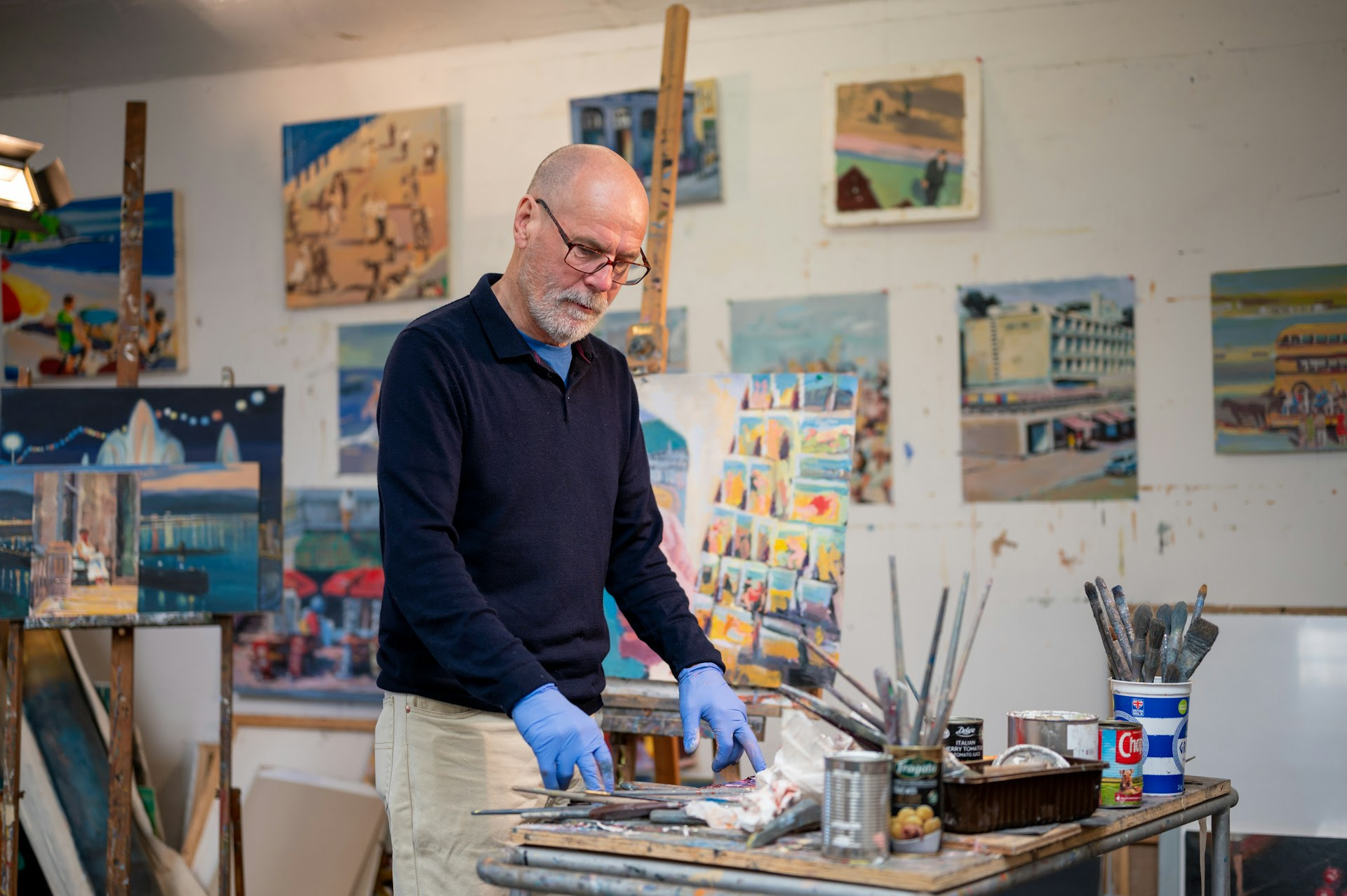
Behind-the-scenes content can be simple. A sketch, work-in-progress photo, studio shot, or short video gives people a look at how the finished artwork came together.
Tell the Story Behind the Piece
Rather than posting only “New art available,” add a little context. Maybe the piece was inspired by a place, memory, photograph, or something you noticed during an ordinary day.
Use Customer Feedback
Testimonials, kind messages, and customer photos can help others see how people respond to your work. Just ask permission before sharing private messages or photographs.
Use Your Natural Voice
You do not need to sound like an advertising agency. Write the way you would normally speak when explaining your artwork to someone who is interested.
Build a Manageable, Low-Stress Promotion Routine
Marketing should not take so much time that it starts interfering with your creative work.
Instead of trying to post every day, choose a schedule you can realistically maintain. For some artists, two or three posts a week may be enough. Tools such as Later or Buffer can also help if you prefer preparing several posts at once.
You can reuse older content too. Many of your current followers may never have seen something you shared months ago.
Newsletters do not need to contain a promotion every time either. Studio updates, works in progress, and short stories about what you are creating can help people stay connected between releases.
Not Into Marketing? Consider Outsourcing
You do not have to handle every part of the promotion yourself.
Some artists ask friends or family to help with photography or video. Others hire freelancers for editing, newsletters, social scheduling, or other tasks that keep getting pushed aside.
Even handing off one task you dislike can give you more time to create. The important thing is that your own voice and artistic direction remain part of the final content.
Expanding Your Reach Without Losing Yourself
You do not need to be active on every platform.
Choose one or two places you actually enjoy using and pay attention to what people respond to. A casual studio photo may create more conversation than a polished graphic, while another audience may prefer short videos or finished artwork.
Analytics can help you notice patterns, but they should not dictate everything you create. Use them as guidance while keeping the focus on the work you genuinely want to make and share.
Bonus: Quick Tips on Print Quality and Color Correction
The webinar also covered several print-preparation questions.
Photos vs. Scans: Both can work. Use the method that gives you a clean, detailed file without unwanted glare, shadows, or distortion.
Resolution: Start with the highest-quality original available. Simply changing the DPI setting does not add detail that was missing from the original image.
Color Profiles: Follow Lumaprints’ current file and color recommendations when preparing artwork for printing, since production guidance can change.
Color Correction: If photographed artwork has a noticeable color cast, compare it with the original and make small adjustments rather than heavily increasing saturation or contrast.
Keep Your Marketing Connected to Your Art
You do not need to become a full-time marketer just to help more people discover your work.
Use what you already have: sketches, works in progress, finished pieces, studio moments, stories behind older artwork, and lessons you picked up while creating. Those things give you something useful to share without turning every post into a sales message.
The most sustainable marketing for artists usually feels like an extension of the creative process. Pick a routine you can maintain, speak in your own voice, and give people enough opportunities to understand the work behind the finished piece.
Want to hear the full discussion? Watch Authentic Promotion for Artists and Creatives for the Lumaprints webinar on storytelling, promotion routines, and reaching more people without making every post feel like a sales pitch.
For more artist resources and previous webinars, visit the Lumaprints YouTube channel.
Frequently Asked Questions
How can artists market their work without sounding salesy?
Talk about the artwork before focusing on the sale. Share where the idea came from, what you enjoyed about making it, or something people would not know just by looking at the finished piece.
What is the best way to market art online?
Choose one or two platforms you can manage consistently, share both finished work and behind-the-scenes content, and pay attention to what brings genuine conversations and interest.
There is no fixed rule. A few thoughtful posts each week can be more sustainable than posting every day and quickly becoming tired of the process.
What can artists post when they do not have new artwork?
Share sketches, older pieces, studio photos, works in progress, customer feedback, close-up details, or stories about artwork you have already created.
No. It is usually better to maintain one or two platforms well than to spread yourself too thin across several accounts.




