
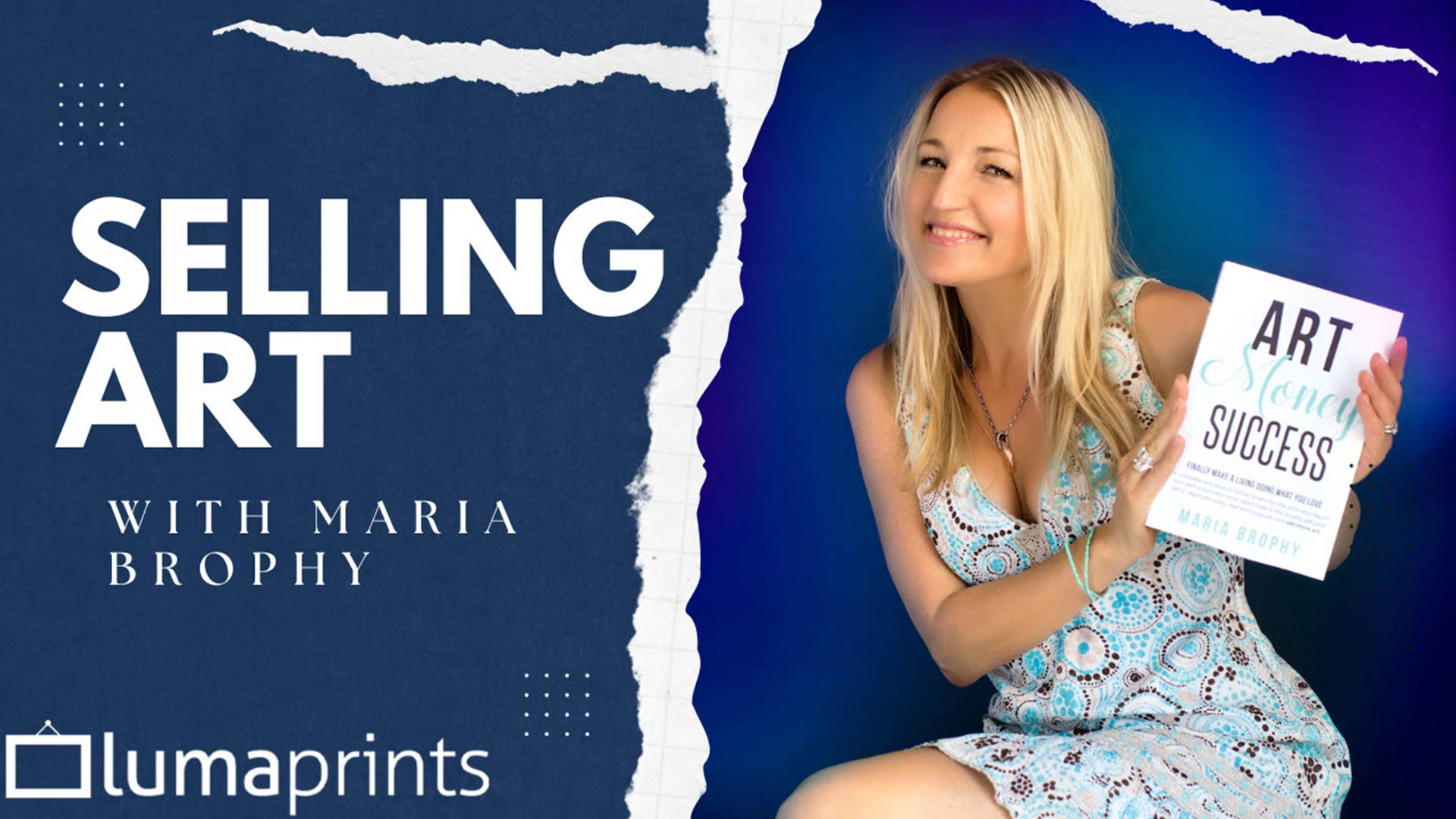
Learning how to sell art involves more than creating good work and waiting for buyers to find it. Artists also need to think about pricing, prints, licensing, collaborations, and how they want their work to reach people. In this webinar, art business consultant Maria Brophy shares what she learned while helping build the career of artist Drew Brophy, from painting surfboards to developing an art business with several ways to earn from the same body of work.
If prints are part of your plan, Lumaprints’ guide to setting up a print-on-demand store is another useful place to start.
Watch the webinar here: Interview with Art Business Consultant Maria Brophy – Lumaprints Learning Series 22.
If you prefer reading, continue below or jump to the section you need.
The Beginning of Maria’s Art Journey
Maria did not begin her career in the art world. She was working in insurance when she met Drew Brophy, who was painting surfboards at the time. As she became more involved with his work, she began seeing opportunities beyond selling individual paintings.
Without a formal background in the art business, Maria learned by asking questions, trying different ideas, and paying attention to what worked. That practical approach eventually became an important part of how she and Drew built the business.
From Surfboards to Success
Maria and Drew experimented with different ways of earning from artwork and eventually realized that one image could have value beyond the original piece.
Maria shared the example of Drew’s painting “Sunrise,” which was later used across different products. That experience changed how they thought about artwork. Instead of treating every painting as something that could only be sold once, they began considering prints, licensing, and other ways the image could continue earning income.
For artists learning how to sell art, this can be an important shift. The original artwork may be one product, but it does not have to be the only one.
The Birth of “Art Money Success”
As Maria and Drew learned what worked, Maria realized that other artists were struggling with many of the same business questions.
She began sharing what they had learned, including the mistakes they made along the way. That eventually led to her book Art Money Success, which covers the business side of being an artist and offers practical guidance based on her experience.
You can learn more about Maria’s work through the Maria Brophy website.
The Essence of Entrepreneurial Thinking
One of Maria’s main points is that artists do not have to choose between being creative and thinking like business owners.
Skills such as pricing, negotiating, marketing, and understanding customers can be learned. They may feel unfamiliar at first, but they become important when art is also expected to provide income.
The goal is not to turn every creative decision into a business decision. It is to understand enough about the business side to make better choices about how your work is sold and which opportunities are worth pursuing.
Diversifying Income Streams
Licensing has been an important part of Maria and Drew’s business. It allows another company to use an artist’s work under agreed terms while the artist keeps ownership of the underlying artwork.
Maria also emphasizes choosing partners carefully. The company, product quality, audience, and way the artwork will be presented should all make sense for the artist.
The U.S. Copyright Office’s guidance for visual artists is a useful resource for understanding basic rights around artwork and reproduction.
Strategic Selling of Prints
Prints give artists another way to earn from an image without selling the original.
Maria and Drew have used both limited and open editions. A signed collector’s edition can be positioned at a higher price, while an open edition may make the same artwork available to more buyers.
Pricing should also reflect more than production cost. Artists need to think about presentation, edition size, shipping, fees, and what the work is worth to their audience. Lumaprints’ guide on how to price art prints looks more closely at those decisions.
The Power of Collaboration
Collaboration can help artists reach people they may not be able to reach on their own.
Maria shared examples of Drew’s artwork appearing on products through other companies. A strong collaboration benefits both sides: the artist reaches another audience, while the partner receives artwork that fits its products or customers.
Not every partnership is worth accepting. Look at the company, its audience, product quality, and how your artwork will be represented before agreeing to work together.
Nurturing a Global Audience
During the webinar, Maria was asked whether artists could build a high income without relying heavily on original artwork. Her answer was yes, with prints, licensing, collaborations, and other income streams all playing a role.
The bigger point is that these opportunities still depend on having people who care about the work. Artists need to stay visible, communicate with their audience, and learn which pieces connect most strongly.
An art business becomes more sustainable when it is built around real relationships with buyers rather than expecting every new artwork to sell on its own.
Frequently Asked Questions
How can an artist start selling art?
Start with a small group of work you are comfortable offering, decide whether you want to sell originals, prints, or both, and make it easy for people to view and purchase them.
Do artists need to sell originals to make money?
No. Prints, licensing, commissions, collaborations, and other products can create additional income.
What is art licensing?
Art licensing allows another business to use an artist’s work under agreed terms covering usage, payment, duration, and other conditions.
Should I sell limited-edition or open-edition prints?
Both can work. Limited editions may appeal to collectors, while open editions can make the artwork available to a wider audience.
How important is building an audience?
Very important. Even strong artwork can be difficult to sell consistently if very few people know it exists.
Build an Art Business That Works for You
Maria Brophy’s experience shows that there is no single formula for how to sell art. One artist may focus on originals, while another builds around prints, licensing, partnerships, or a combination of several income streams.
The important thing is to understand what works for your artwork and your audience. Test ideas, know your costs, protect the rights to your work, and choose opportunities that fit the kind of business you want to build.
If prints are part of your plans, explore Lumaprints’ print-on-demand fulfillment options to see how you can sell physical artwork without managing every print and shipment yourself.
Watch the complete discussion here: Interview with Art Business Consultant Maria Brophy – Lumaprints Learning Series 22.
All previous and upcoming webinar videos are available on the Lumaprints YouTube Channel.




