Introduction
Hot press paper has a smooth surface that favors precise lines, small details, and clean photographic reproduction. Cold press paper has a pronounced texture that suits watercolor and other painterly images. The right choice depends on which qualities of the artwork should stand out in the finished print.
At Lumaprints, we offer both finishes for fine art paper prints. A watercolor reproduction may benefit from a textured sheet that recalls traditional artist paper. The same painting may look better on hot press if delicate penwork is its defining feature. We recommend choosing the surface that supports the artwork rather than relying on a fixed rule about its medium.
Understanding Hot Press and Cold Press Paper
Hot press and cold press refer to paper finishes. Hot-pressed paper is smoothed through heat and pressure; cold-pressed paper retains a more visible surface texture, often called tooth. Papermaker Hahnemühle explains how paper surfaces are made for artists interested in the manufacturing process. In a printed reproduction, the practical difference is the appearance of the paper beneath the image and the way that surface is perceived under light.
The terms are also used for blank watercolor paper. That is a different decision from selecting a fine art inkjet paper for a giclée print. The texture of a printed sheet can suggest the character of the original material, but it cannot reproduce the physical thickness of paint or the movement of wet pigment across a painting surface.
Hot Press vs Cold Press Paper Comparison
| Compare | Hot Press | Cold Press |
| Surface | Very lightly textured matte | Heavily textured matte |
| Primary strength | Produces a more detailed, well-defined image | Adds visible texture, depth, and contrast |
| Consider for | Fine art prints and photography where a smooth finish and defined detail matter | Watercolor-style art, painterly images, and photography suited to a textured finish |
| When comparing prints | Fine details, edges, and tonal transitions | Inspect how texture appears across the image, especially in lighter areas |
| Our paper specifications | 330 gsm, neutral white, acid-free, 100% cotton rag | 340 gsm, neutral white, acid-free, 100% cotton rag |
Hot Press Paper for Detailed Artwork
The very light texture of hot press paper helps small elements remain visually distinct. This is particularly valuable in botanical illustration, architectural drawings, pen and ink work, and digital art with crisp shapes. A smooth matte surface also suits photography when the image relies on sharp detail or subtle transitions rather than the texture of the print material.
Our Hot Press Smooth Matte gives detailed artwork a neutral white base and a very lightly textured matte finish, so the paper does not compete with fine lines or small marks. Its acid-free cotton rag construction also makes it suitable for archival color and black-and-white reproductions.
We recommend reviewing a print at its intended size. A detailed image can appear clear on a backlit monitor while small text or fine hatching becomes less legible after printing at a smaller size. Review those elements before approving an edition. Hot press can help the existing detail remain visible, although the original file must have enough resolution to reproduce it.
Cold Press Paper for Painterly Reproductions
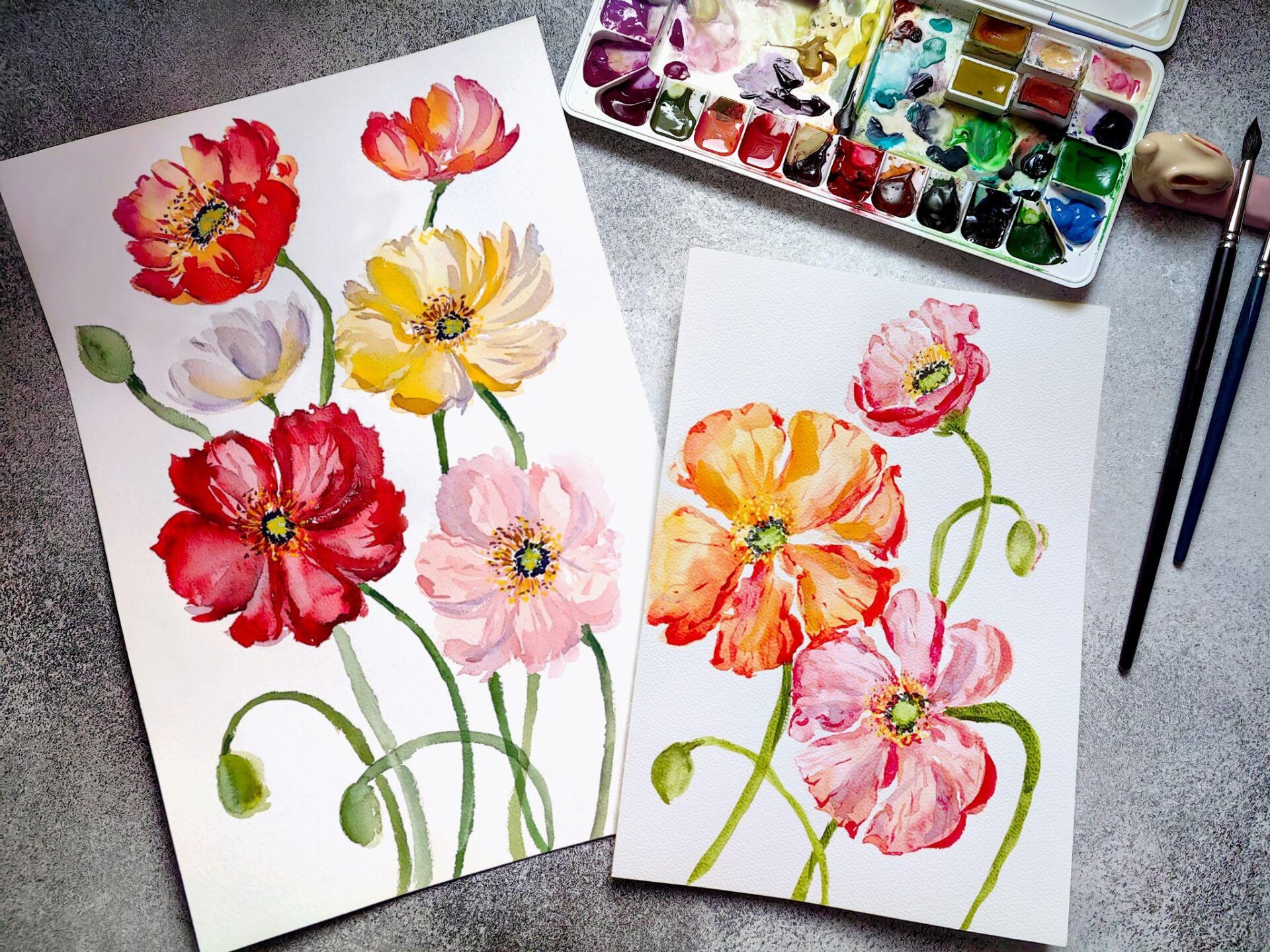
The cold press contributes its own visible character to a print. For watercolors, the textured surface can support the appearance of soft washes and the hand-painted quality of the original. Gouache, loose acrylic painting, and expressive landscapes and florals may also benefit from a sheet that feels more closely connected to traditional art materials.
Our Cold Press Textured Matte brings the paper surface into the composition. Its neutral white cotton rag base has a pronounced texture reminiscent of watercolor paper, most visible in lighter areas and when viewed up close.
Texture should serve the composition. In an image with broad color areas, the surface may add welcome depth. In an image filled with fine lettering or closely spaced lines, the same surface may attract attention away from those details. A small proof provides a clearer answer than the artwork category alone. Cold press can also be effective for fine art photography, provided the texture is consistent with the intended style of the photograph.
How Paper Finish Affects Giclée Prints
A fine art reproduction places an image on a new material. We produce our fine art paper prints with aqueous pigment inks on regularly calibrated Canon giclée printers. An original painting may have visible brushstrokes, watercolor paper grain, or canvas texture; the print carries an image of those qualities, while the chosen paper contributes its own physical surface. That is why the same digital file can look different on hot press and cold press.
On hot press, the comparatively even surface leaves fine edges and small marks easier to appreciate. On cold press, the texture is more apparent across the printed sheet and can reinforce a painterly subject. Neither surface recreates raised impasto. For work whose presentation depends on a woven material, canvas prints may be worth comparing with fine art paper.
Surface texture and display lighting can change how color is perceived. Neither finish is universally more vibrant: both of our papers can reproduce a wide range of colors and deep blacks. We recommend comparing the same image on each finish under the light in which the work will be displayed.
Choosing Paper by Artwork and Display
For illustration with fine linework, typography, or intricate digital details, hot press is a practical first choice. For watercolor and other painterly reproductions, cold press is often a fitting starting point. Images that combine precise drawing with broad washes warrant a side-by-side comparison. The priority is the characteristic most important to the finished artwork, whether that is the clarity of a line or the presence of a traditional paper surface.
Photographers should consider both the subject and the intended presentation. Architectural photography and images that depend on precise detail may be suited to hot press. A quiet portrait or landscape may gain a different artistic quality on cold press. Viewing distance matters: paper texture is easier to see in a small unframed print held close than in a larger piece displayed behind glazing.
For artists selling several sizes of the same image, test the smallest size as well as a representative larger format. Fine marks that read clearly in a large print may need a smoother surface at a smaller scale. When framing is part of the final product, evaluate the selected paper within that presentation rather than approving the loose sheet alone.
Preparing and Reviewing Fine Art Prints
For fine art paper prints, we require 300 dpi at the final print size. Check the crop, edges, and any small lettering before ordering. Neither finish can recover detail missing from a low-resolution file.
We recommend comparing the same image at the same size on both papers. Examine fine lines, shadow detail, pale colors, and smooth gradients. Light areas can be especially useful for assessing how prominently the paper texture appears. Review the samples in the light in which the prints will be displayed, then select the finish that best supports the complete composition.
For an edition, keep a copy of the approved file and a physical reference print, together with the chosen paper and size. This gives you a reliable reference when reordering our fine art paper prints.
Archival Properties and Print Care
For archival reproductions, either finish is a sound choice: both of our papers are acid-free and made from 100% cotton rag. Although cold press is 10 gsm heavier, paper weight alone cannot establish which print will last longer.
How a print is handled and displayed also matters. Protect paper prints from direct sunlight and use suitable framing or storage materials. The Library of Congress guidance on preserving works on paper provides further information about light exposure, handling, and storage.
Selecting the Right Paper Finish
Select hot press when the artwork depends on fine lines, small type, crisp photographic detail, or a visually quiet paper surface. Select cold press when visible texture complements watercolor washes, painterly forms, or a traditional fine art presentation. If the image has both qualities, compare matching prints at the size and lighting planned for display. The result should be judged by the artwork itself, not by a fixed rule about its medium.
Frequently Asked Questions
What is the main difference between hot press and cold press? – Hot press has a smoother surface; cold press has a more pronounced texture. For printed reproductions, the difference is most apparent in the visibility of the paper surface and the presentation of fine detail.
Which is better for detailed illustrations and photographs? – Hot press is generally the stronger starting point for intricate linework, small typography, and photographs where clarity is a priority. Compare a proof at the intended print size before approving an edition.
Should watercolor reproductions always use cold press? – Cold press can complement watercolor artworks with a surface reminiscent of traditional watercolor paper. A painting with intricate ink outlines or very small details may benefit from hot press. Both options can be appropriate depending on the image.
Does the paper surface change color vibrancy? – Yes. Surface texture and display lighting can affect how vibrant a print appears. Both of our papers can reproduce a wide range of colors and deep blacks, so compare the same artwork on each finish before deciding.
Are hot press and cold press prints archival? – Both our papers are acid-free and made from 100% cotton rag. Proper framing, display, and storage also contribute to the long-term care of the finished print.
Choosing Fine Art Paper for Your Artwork
A paper finish should reinforce what makes an image distinctive. Hot press presents detail on a smooth matte surface; cold press gives painterly work a more visible paper texture. We offer both as cotton rag fine art papers and recommend comparing your artwork in print before making the final choice. Explore our fine art paper options to select the finish for your next reproduction.