Shipping wall art can become complicated quickly because every piece is different. A small paper print may be easy to send, while a large framed canvas can require a larger box, more protection, and a different delivery method. When shipping artwork, size, weight, material, and framing can all affect the final cost.
If you are learning how to ship artwork, it helps to understand carrier rules, package dimensions, delivery speed, surcharges, and freight requirements before setting prices or promising delivery dates.
If you prefer reading to watching, the sections below cover the main points from the original webinar.
Understanding Shipping Options
The first step is choosing a shipping service that fits the artwork you are sending. Not every order needs expedited delivery, and the cheapest option is not always the most practical one.
For USPS, Ground Advantage can work for lighter packages when delivery is not urgent. Priority Mail is faster, while Priority Mail Express is designed for time-sensitive shipments. Because rates and service details can change, check the latest USPS shipping options before choosing a method.
For FedEx or UPS, Ground Economy may be useful when cost matters more than speed. Ground or Home Delivery can work for standard residential and commercial shipments, while Second Day or Overnight services suit urgent orders.
Before choosing a carrier, compare package size, weight, destination, delivery time, and tracking.
Factors Affecting Shipping Costs
Two things can change shipping costs quickly: weight and dimensions.
A lightweight paper print may qualify for a lower-cost service, while framed pieces or metal prints can become more expensive as weight increases. Dimensions matter just as much. A canvas may not weigh much, but once packed safely, the box can take up far more space.
That is why shipping artwork is not always as simple as weighing the piece. A lightweight oversized package can still cost more because of the space it takes during transportation.
If you sell several wall art sizes, check shipping costs for each one before setting prices. A small increase in print size can sometimes move a package into another rate category.
Additional Charges to Consider
The carrier’s base rate may not be the final amount you pay. Extra charges can include residential delivery fees, rural or extended-area surcharges, oversized-package fees, additional handling, seasonal charges, and address correction costs.
These fees are easy to miss. If you ship regularly, review actual carrier invoices occasionally so your pricing stays realistic.
Pickup and Freight Options
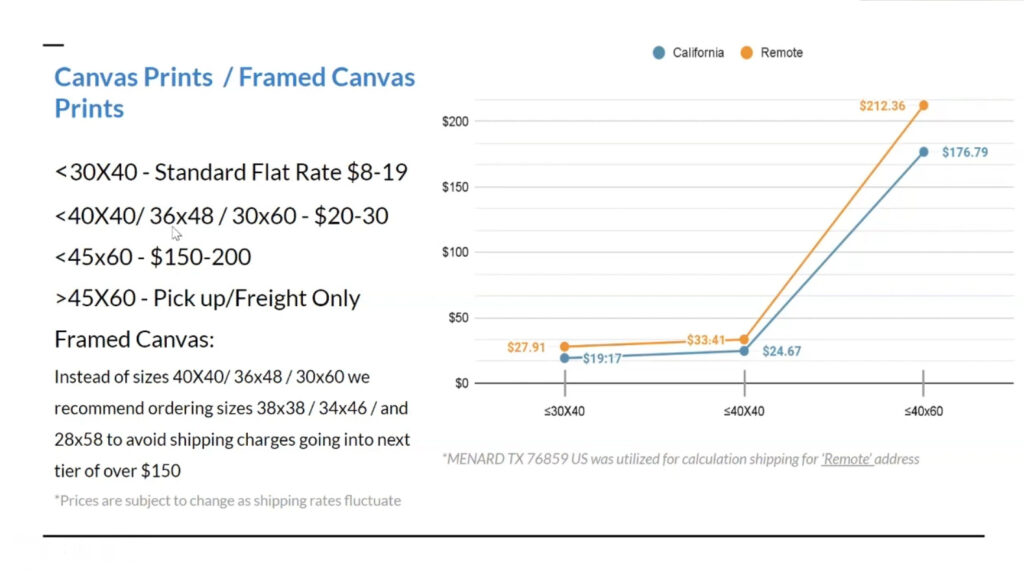
Very large wall art may be too big for normal parcel shipping. With Lumaprints, canvases larger than 47×60 may need to move by freight rather than through a standard carrier. For oversized orders, customers can choose the Pickup option at checkout and contact the Lumaprints customer service team at [email protected].
Freight can also make sense for bulk orders. If you are learning how to ship artwork at larger sizes, confirm freight requirements before quoting the customer.
Shipping Canvas and Framed Canvas Prints
Canvas prints are usually lighter than some other wall art materials, but their physical size still affects shipping. Once a frame is added, the package becomes wider and heavier, and the corners need extra protection.
Shipping Fine Art Paper Prints
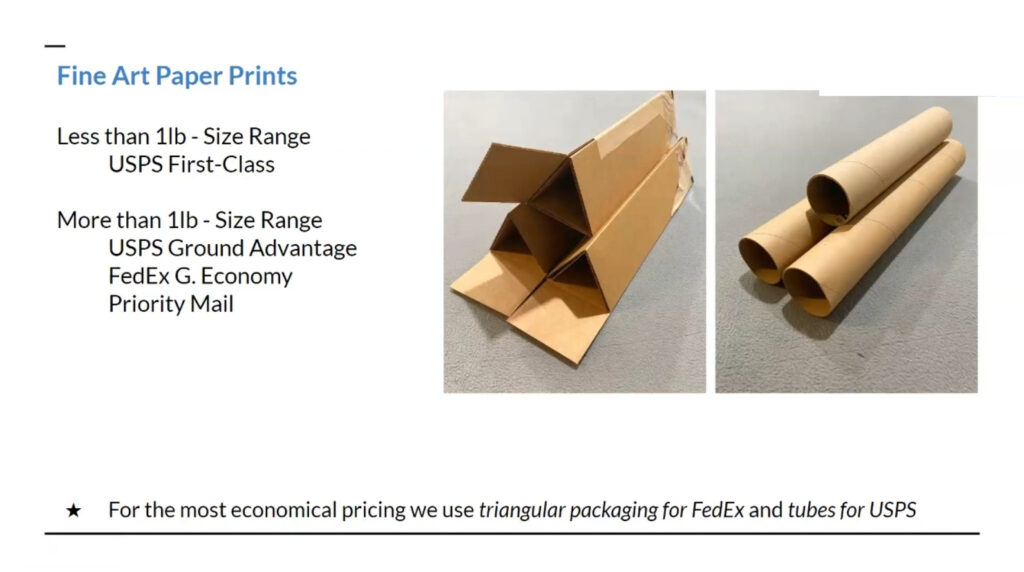
Fine art paper needs protection from bending, pressure, moisture, and surface damage. The packaging should support the print throughout shipping so it arrives in the same condition it left production.
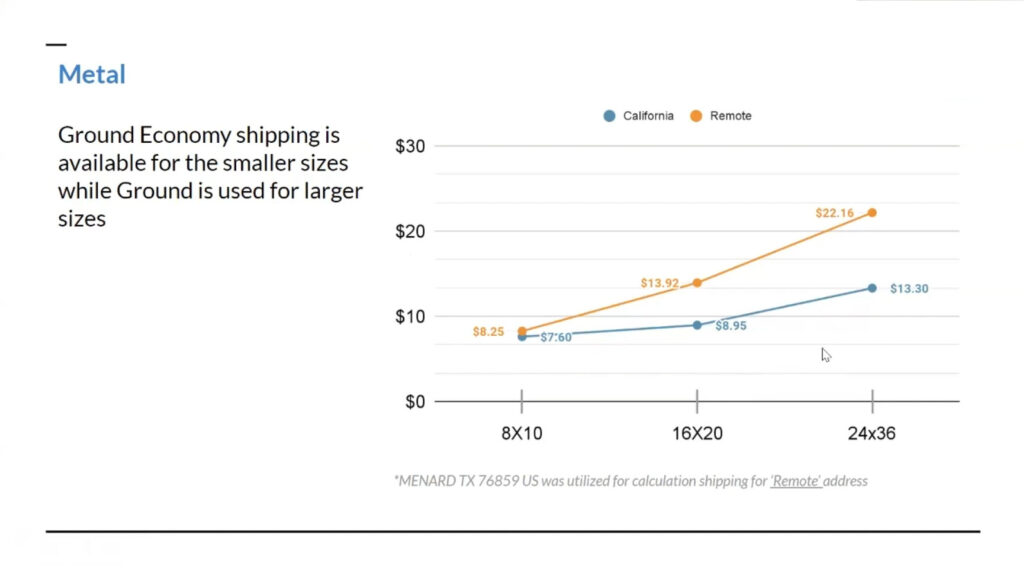
Shipping Metal Prints
Metal prints are rigid, but their edges and corners still need protection. The print should also be secured so it cannot move inside the package during transit.
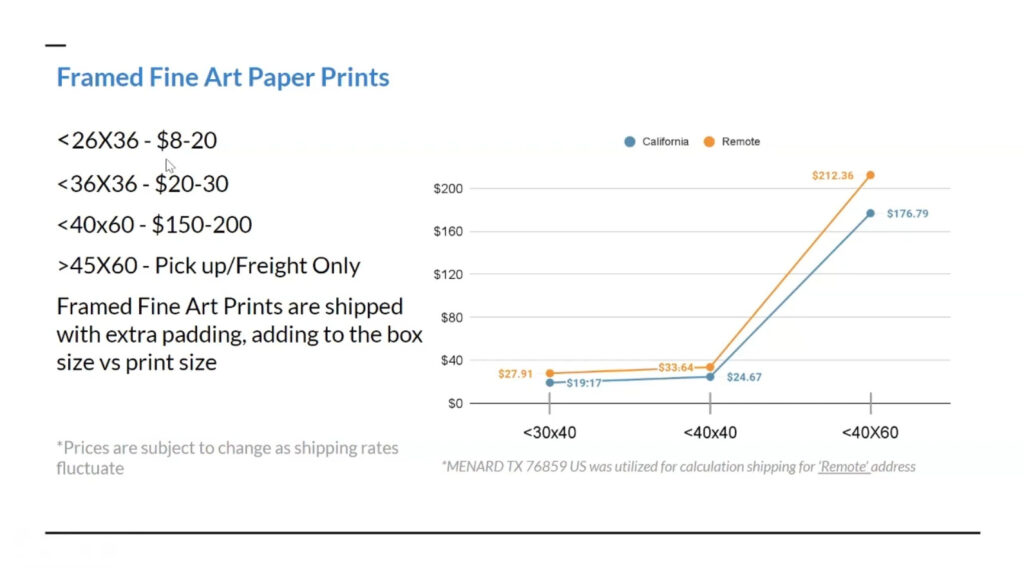
Shipping Framed Fine Art Paper Prints
Framed fine art paper includes the print, frame, glazing, and hanging hardware. That usually means more protective material and a larger package than an unframed print.
Reducing Shipping Costs
Compare carriers using the actual packed dimensions and weight instead of automatically choosing the same service every time. Watch dimensional break points because a small increase in wall art size can cause a noticeable jump in cost.
If a customer needs an order quickly, compare faster production with expedited shipping rather than assuming the fastest shipping service is always best. For international orders, plan for customs, duties, taxes, longer delivery windows, and carrier restrictions.
Knowing your most common product sizes and destinations also makes it easier to spot where shipping costs can be improved.
Make Shipping Easier for You and Your Customers
Customers rarely think about shipping when everything goes right. They notice it when a package arrives late, damaged, or at a price they did not expect.
That is why shipping artwork should be treated as part of the overall buying experience. Think about the material, size, framing, destination, and delivery needs before choosing a service. A small paper print and a large framed canvas should not automatically be handled the same way.
Clear information helps too. Tell customers when production is expected to finish, how shipping works, and whether oversized pieces require special arrangements.
Want to hear the original discussion? Watch Understanding Shipping Options for Wall Art – Lumaprints Learning Series 19 for more about carriers, freight, wall art sizes, and shipping costs.
All previous and upcoming webinar videos are available on the Lumaprints YouTube Channel.
Frequently Asked Questions
What is the best way to ship artwork?
There is no single method that works for every piece. Consider the artwork’s size, weight, material, destination, value, and required delivery speed.
How can I lower the cost of shipping artwork?
Compare carriers, watch package dimensions, and avoid paying for faster delivery when the customer does not need it.
How should framed artwork be shipped?
Protect the frame, corners, surface, and glazing, and make sure the piece cannot move freely inside the package.
Can oversized artwork use normal parcel shipping?
Not always. Large canvases and framed pieces may exceed standard carrier limits and require freight shipping.
What should customers know before ordering wall art?
Make production time, shipping method, expected delivery window, and any oversized-order requirements clear before checkout.