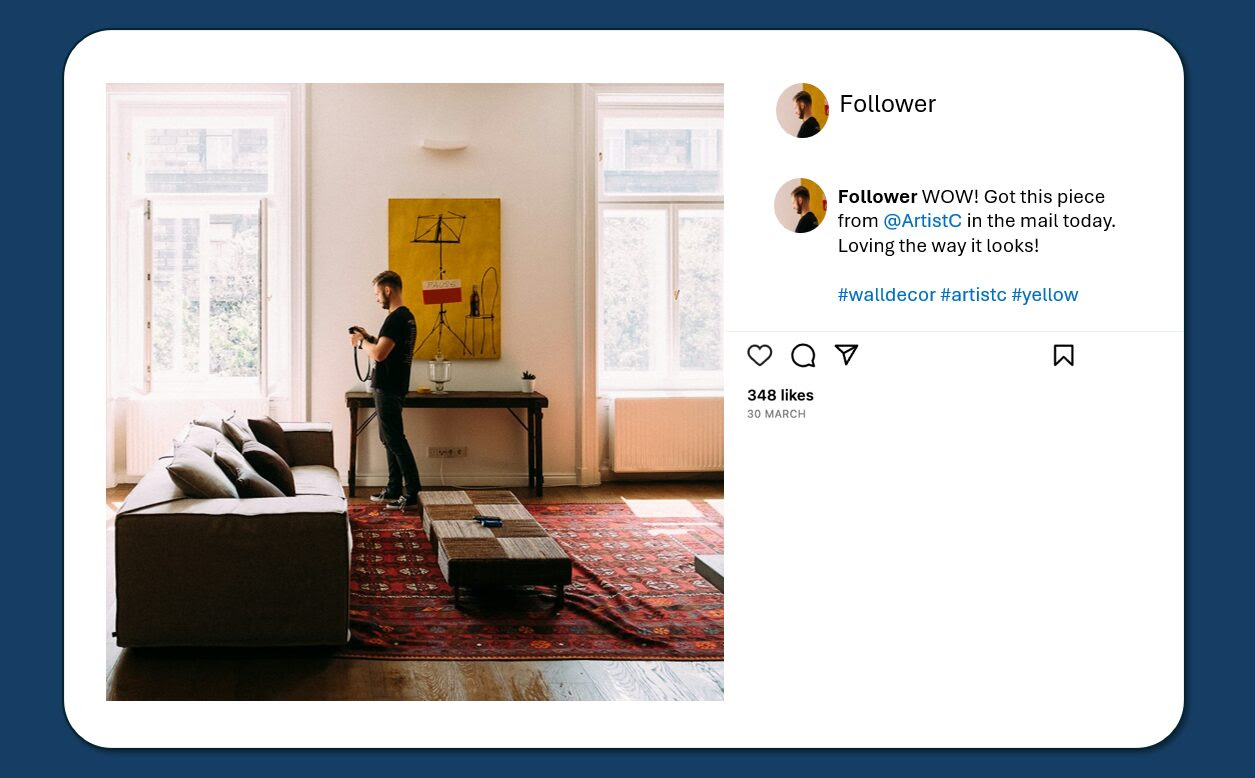
Selling art online can sometimes make it difficult for new customers to imagine what a print will actually look like in their own home. Product mockups help, but a photograph from someone who has already purchased the artwork often feels more believable.
That is where user generated content can be useful. Reviews, customer photos, short videos, social posts, and even simple comments can show potential buyers how real people experience your products. For a print-on-demand art business, this kind of content can add credibility without requiring every marketing message to come directly from the brand.
In this webinar, we looked at practical ways to collect UGC, use it in your marketing, and handle customer content responsibly.
What Is User-Generated Content and Why Is It Important?
User-generated content is any content customers create about your products or business. It may be a review, photograph, video, social media post, comment, or story showing how they use or display something they purchased.
For artists and print-on-demand sellers, this can be especially helpful because customers are buying something visual. A photograph of a canvas hanging above a sofa or a framed print in a home office gives shoppers another way to judge scale, style, and presentation.
UGC also gives customers a voice in the way your brand is presented. Instead of every product claim coming directly from you, potential buyers can see what previous customers actually experienced.
That does not mean every customer post should automatically become marketing material. The most useful content is genuine, relevant, and shared with permission.
Types of User-Generated Content to Collect
There are several types of UGC worth paying attention to.
Reviews: Reviews give future customers an outside perspective on your products and service. Specific comments about print quality, packaging, delivery, or how the artwork looked in person are often more useful than a short “Great product” review.
Photos and Videos: Customer photos can show artwork in spaces you may never have considered for a mockup. Living rooms, bedrooms, offices, gallery walls, and even small reading corners can give other shoppers ideas for displaying their own prints.
Customer Tags: When customers tag your business on social media, it becomes easier to discover content connected with your products. These posts can also lead to conversations with people who are already interested in your work.
Behind-the-Scenes Content: Customers are not the only source of authentic content. Showing how artwork is created, prepared, printed, or packaged can complement customer-generated material and give people more context around the finished product.
How to Encourage UGC
The easiest way to get more customer content is to make sharing feel natural rather than turning it into another requirement.
Ask After Delivery: A short follow-up email asking how the artwork looks in the customer’s space may be enough to encourage a photo or review.
Loyalty Rewards: If you already operate a loyalty program, you can consider rewarding customers who share useful feedback or photographs. Keep the reward tied to participation rather than requiring a positive opinion.
Feature Customer Content: People are often happy to see their photograph or review highlighted by a brand they like. If someone shares something useful, ask whether you can feature it on your website, social media, or newsletter.
Early Access: Regular customers who enjoy sharing your work may appreciate early access to new collections or product releases.
Interactive Challenges: A simple theme such as “Show us your gallery wall” can give customers a reason to share without making the campaign feel overly promotional.
You do not need to use every tactic. Start with one approach that feels appropriate for your audience and see whether people actually respond.
Integrating UGC Into Your Marketing Strategy
Collecting content is only useful if you have a sensible place to use it.
Social Media: Customer photos and videos can break up a feed filled only with polished product images. Always ask permission before reposting and credit the customer when appropriate.
Website: Customer galleries, reviews, or photographs on product pages can help shoppers picture how the artwork looks outside a studio mockup.
Email: A customer photograph or short testimonial can make an email feel more personal, especially when it relates directly to the artwork being promoted.
Paid Advertising: Customer-created photos or videos may also be useful in advertisements, but permission becomes especially important when the content is being used commercially.
Good user generated content marketing should support the customer’s original experience rather than reshape it into something it was not. A genuine photograph with a short comment can often feel more convincing than heavily editing the content until it looks like another advertisement.
Handling Feedback and Reviews Responsibly
UGC will not always be completely positive, and that is not necessarily a problem.
If a customer leaves constructive criticism, read it before deciding how to respond. Deleting every negative comment can make a brand look less transparent, especially when the feedback raises a reasonable concern.
When a complaint needs attention, acknowledge the issue and offer a practical next step. If order details or personal information are involved, move the detailed conversation into email or direct messaging.
Balanced feedback can actually be useful. It shows shoppers that the reviews come from real customers rather than being selected only because they praise the product.
Legal and Ethical Considerations
Just because someone posts a photograph publicly does not automatically mean you should use it in your marketing.
Ask for Permission: Contact the customer before reposting their photograph, video, or written content. Be clear about where you would like to use it.
Credit the Creator: When appropriate, tag or name the customer who created the content.
Explain Commercial Use: Permission to repost something on Instagram does not necessarily mean permission to use it in an advertisement, email campaign, or other commercial material. Ask specifically when the use changes.
Respect a Change of Mind: If someone later asks for their content to be removed from your marketing, have a straightforward way to handle that request.
Being careful with customer content protects the relationship that made the UGC valuable in the first place.
Let Your Customers Help Tell the Story
You do not need a huge library of customer content before user generated content becomes useful. One detailed review, a photograph of a print in a real home, or a customer showing how they built a gallery wall can give future buyers information that your own product description cannot.
Start small. Ask customers for honest feedback after delivery, save useful content when permission is given, and place it where it genuinely helps someone make a buying decision.
The best UGC does not feel like advertising. It feels like one customer showing another what their experience was actually like.
Want to hear the full discussion? Watch From Fans to Brand Ambassadors: Harnessing User-Generated Content for the Lumaprints webinar on collecting customer content, using it in marketing, and handling reviews responsibly.
For more artist and print-on-demand resources, visit the Lumaprints YouTube channel.
Frequently Asked Questions
What is user-generated content?
User-generated content is material created by customers, such as reviews, photographs, videos, social posts, or testimonials about your products.
Why is UGC useful for print-on-demand businesses?
It shows potential customers how real buyers received, displayed, and experienced your products, which can make purchasing online feel less uncertain.
How can I encourage customers to create UGC?
Ask for feedback after delivery, make sharing easy, and consider featuring customer content or offering appropriate participation rewards.
Ask permission first. If the customer agrees, credit them where appropriate and use the content only in the way you discussed.
Where should I use user-generated content?
UGC can work on product pages, social media, email campaigns, customer galleries, and advertisements when you have the proper permission.