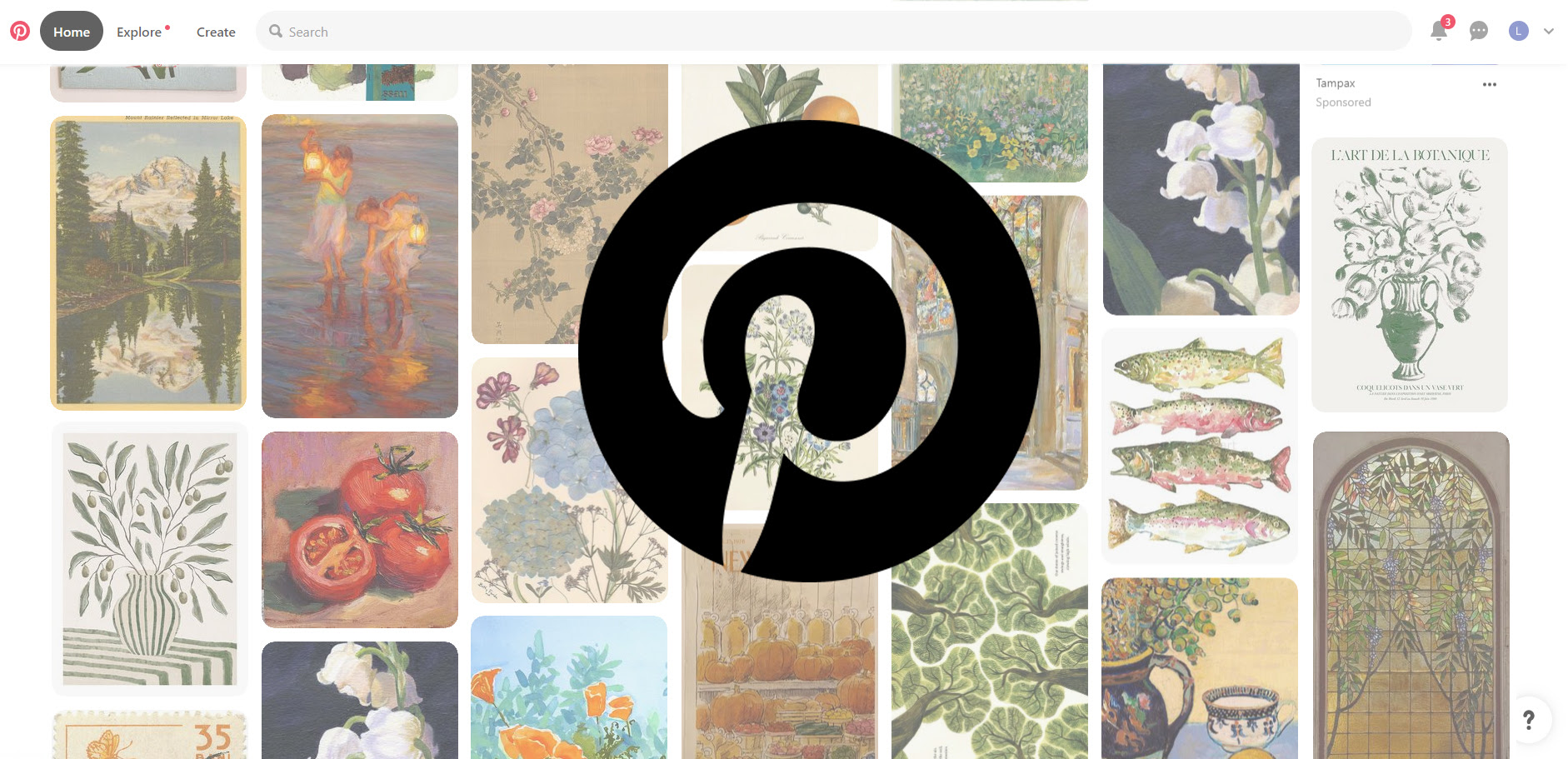
Pinterest works differently from many social platforms. People often use it while actively looking for ideas such as room inspiration, wall décor, gifts, color palettes, and products they may want to come back to later. That makes it particularly useful for artists whose work is highly visual.
A good Pinterest marketing strategy is not about uploading every artwork you have and hoping someone finds it. It is about making your Pins easy to discover, showing your work in situations people can imagine for themselves, and giving interested users a clear path back to your store.
For artists selling through print-on-demand fulfillment, Pinterest can also help introduce artwork to new audiences without requiring you to keep finished inventory yourself.
Why Pinterest Is a Powerful Marketing Tool

Reaching People Who Are Looking for Ideas
Pinterest users often arrive with something already in mind. They may be researching bedroom décor, planning a gallery wall, looking for a housewarming gift, or collecting ideas for a future renovation.
That gives artists an opportunity to appear while someone is still deciding what they want rather than only after they have chosen a particular product.
A Natural Fit for Wall Art
Wall art is highly visual, which makes it easy to present naturally on Pinterest. You can show a finished print on its own, place it in a room mockup, share close-up details, or create a Pin around a particular decorating idea.
A photograph of a landscape print above a sofa, for example, gives someone more context than a product image sitting against a plain background.
That practical, visual approach is at the heart of Pinterest marketing for artists.
Creating an Impactful Pinterest Strategy
Set Up a Pinterest Business Account
A business account currently gives you access to Pinterest Analytics and advertising tools, which makes it easier to see how your Pins are performing.
Keep your profile recognizable and straightforward. Use a clear profile image, explain the kind of artwork you create, and organize boards around subjects people may actually search for.
Instead of vague board names, try categories such as:
- Minimalist Wall Art
- Landscape Photography Prints
- Gallery Wall Ideas
- Abstract Art for Living Rooms
The board should make sense to someone who has never heard of your business before.
Create a Schedule You Can Maintain
Pinterest does not need to become another platform you have to feed constantly.
Create a realistic schedule and reuse useful material. One artwork might become a product Pin, a room mockup, a close-up detail, and part of a seasonal décor idea.
Pinterest also notes that relevant Pins can continue resurfacing over time, including when seasonal searches return, so useful content does not necessarily stop working after the day you publish it.
Optimizing Your Pinterest Content

Use Keywords Naturally
Pinterest functions partly as a discovery and search platform, so the words around your images matter.
Use relevant phrases in Pin titles, descriptions, and board names. A photograph might be described as “coastal wall art for a bright living room” rather than simply “new print.”
Think about what someone would search for rather than repeating the name of the artwork.
Make the Image Do Most of the Work
Pinterest is visual first.
Use clear, high-quality images and show enough context for someone to understand what they are looking at. For wall art, realistic room images are especially useful because they help customers judge style and scale.
If you sell canvas prints, for example, showing the canvas hanging in an actual room can communicate much more than a close-up product image alone.
Text overlays can be useful for gift guides, decorating tips, or promotions, but they do not need to appear on every Pin.
Engaging With Your Pinterest Audience
Pinterest does not require constant conversation in the same way some social platforms do, but interaction still matters.
Pay attention when people comment or respond to your Pins. You can also save useful content that complements your own boards rather than making every board entirely self-promotional.
Most importantly, notice what people save and click. Their behavior can tell you which artwork, rooms, subjects, or styles are attracting genuine interest.
Utilizing Pinterest Ads
Pinterest advertising can help you reach a wider audience once you know which content already performs well organically.
Business accounts currently support advertising formats including image, video, carousel, collection, and other ad formats.
You do not necessarily need to promote a Pin immediately.
Let your organic Pins collect some data first. If one consistently generates saves or sends visitors to your website, it may be a stronger candidate for paid promotion than something you have never tested.
Harnessing Pinterest Analytics

Pinterest Analytics can show metrics including impressions, saves, Pin clicks, and outbound clicks.
Those numbers answer different questions.
Impressions tell you whether people are seeing the content. Saves suggest that people want to return to it. Outbound clicks are particularly useful when your goal is getting potential customers from Pinterest to your store.
Do not judge your entire strategy by one viral Pin. Look for patterns across several weeks and see which subjects, images, and board themes repeatedly attract attention.
Incorporating Pinterest Into Your Website
Pinterest currently recommends adding its Save button to your website so visitors can save images directly to their own boards.
For an art store, that can be useful even when someone is not ready to buy immediately. A visitor may save a print to a bedroom or gallery-wall board and return to it later.
Make sure the images on your website are worth saving. Good product photography and realistic lifestyle images can continue working for you after someone leaves the site.
Build a Pinterest Presence That Leads Somewhere
A successful Pinterest marketing strategy should do more than produce impressions. It should help the right people find your artwork, understand how it might look in their space, and make it easy for them to reach your store when they want to know more.
Start with a few useful boards, create Pins from artwork you already have, and watch which images people save and click. You do not need dozens of new Pins every week. A smaller collection of useful, searchable content is easier to maintain and gives you something meaningful to learn from.
Want to see the full strategy in action? Watch Leveraging Pinterest for Marketing Your Print-on-Demand Wall Art for the Lumaprints webinar on Pinterest content, optimization, advertising, and analytics.
For more artist and print-on-demand resources, visit the Lumaprints YouTube channel.
Frequently Asked Questions
Is Pinterest good for artists selling wall art?
Yes. Its visual, search-oriented format makes it useful for showing artwork, room inspiration, decorating ideas, and products to people actively browsing for ideas.
What should artists post on Pinterest?
Try finished artwork, room mockups, close-up details, gallery-wall inspiration, decorating ideas, seasonal collections, and behind-the-scenes content.
How often should artists post on Pinterest?
There is no fixed requirement. Focus on a schedule you can maintain and publish useful Pins consistently rather than posting large amounts at once.
What Pinterest metrics should artists track?
Look at impressions, saves, Pin clicks, and especially outbound clicks when your goal is bringing potential customers to your website.
Should artists use Pinterest ads?
Ads can help expand reach, but test your Pins organically first. Content that already attracts saves or clicks can give you a better starting point for paid promotion.