
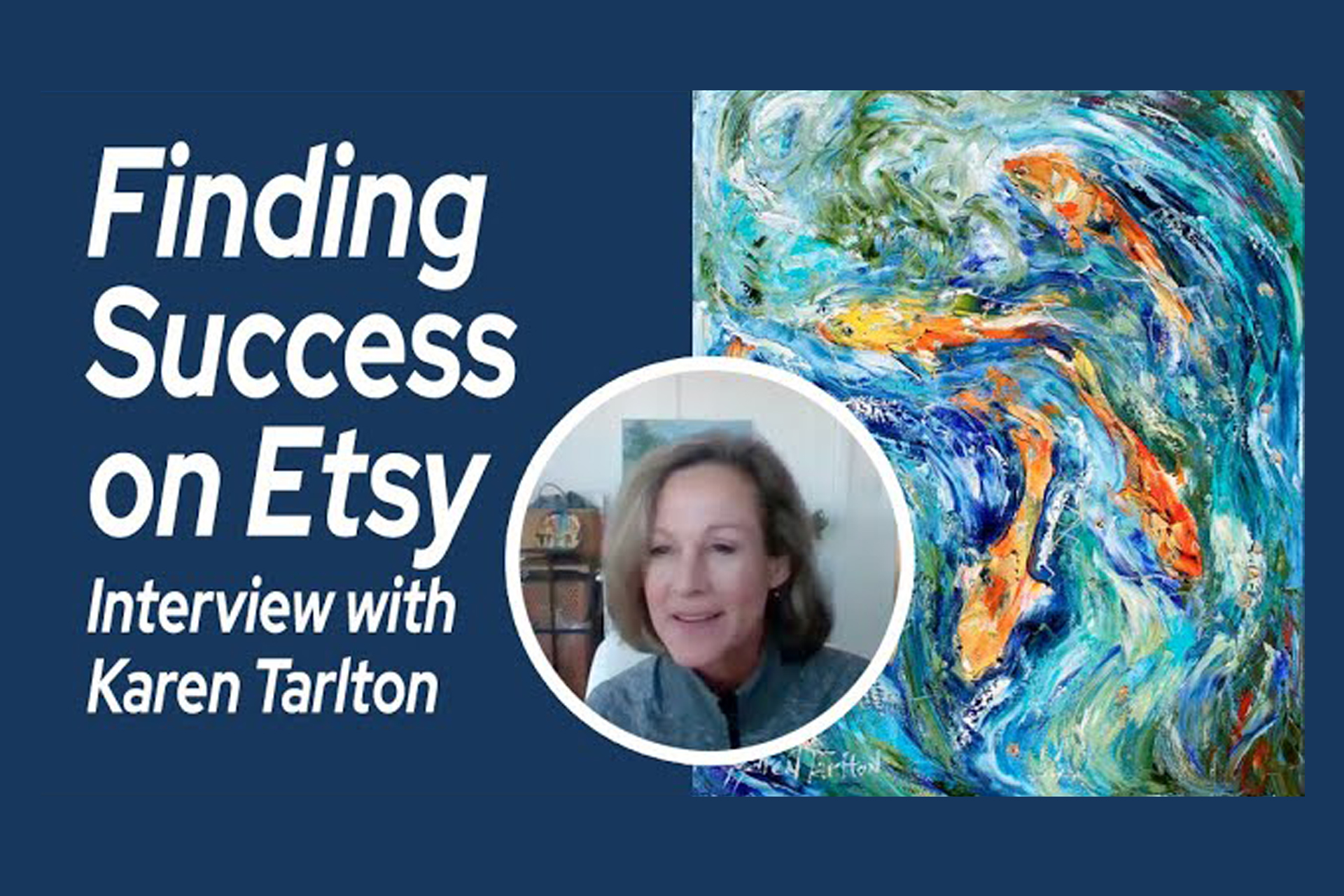
Building an art career usually happens through years of practice, small opportunities, and a willingness to adapt. Karen Tarlton’s story reflects that process. She built her skills through classes, workshops, daily painting, local art communities, and eventually online marketplaces. For artists exploring Etsy for artists, her experience shows how creative work and the business side can grow together.
In this webinar, Karen talks about her early training, moving from eBay to Etsy, selling originals and reproductions, preparing for seasonal demand, and protecting time for creativity. If you are learning how to build an art career, her story offers a practical look at what that can involve. Artists interested in selling prints can also explore Lumaprints’ print-on-demand fulfillment options.
The Artistic Beginnings
Karen says she has always been an artist, but becoming a working fine artist took years of practice. She studied art at UC Davis, later attended the Corcoran School of Fine Art in Washington, D.C., and continued learning through workshops and regular painting.
Her experience is a useful reminder that an art career rarely begins with one big break. Skills develop over time, and consistent work gives artists a chance to understand what they enjoy making and where their strengths are.
The Role of Artistic Community
Other artists played an important role in Karen’s development. Classes and workshops introduced her to people who used tools and techniques she had not tried before.
One example was palette knife painting. Karen became interested in the technique after watching another student use a palette knife, and it eventually influenced the direction of her own work. Being around other artists can expose you to ideas that are difficult to discover when you always work alone.
Education Beyond the Classroom
Karen continued learning outside formal art school by attending workshops, painting often, and spending time with other artists. That hands-on experience helped her keep developing after her classes ended.
For emerging artists, education does not have to mean staying in school. Workshops, local groups, practice, and conversations with other creatives can all become part of the learning process.
Transition to the Online Marketplace
Karen began selling art online during the earlier days of eBay, when online art sales were still relatively new. As a daily painter, she could regularly list new pieces and connect with buyers beyond her local area.
As eBay changed and became crowded with many kinds of products, Karen and other artists began moving toward Etsy. That transition became an important step in her online business and showed her that artists sometimes need to move when the marketplace around them changes.
Etsy: The Home for Artisans
When Karen joined Etsy, the platform was much smaller, and regularly listing her artwork helped her gain visibility. Today, Etsy for artists is far more competitive, so simply uploading a few pieces and waiting for sales is unlikely to be enough.
Good photography, clear titles, useful descriptions, regular shop activity, and customer reviews all help buyers understand what they are purchasing. Before opening a larger catalog, it also helps to decide which pieces will be originals, which will be offered as prints, and what sizes you can reliably fulfill. That keeps the shop easier to manage while you learn what buyers respond to.
For artists who are not ready to build a full ecommerce website, Etsy can still provide a practical place to test which work attracts attention.
What Makes Etsy Unique
Etsy gives artists access to people who are already browsing for creative products, but running a shop still involves real costs and responsibilities.
If you are selling art on Etsy, look beyond the price of materials when setting your prices. Etsy’s official seller fees guide explains the fees sellers may encounter. Add those costs to printing, packaging, shipping, and the amount you need to earn from the sale.
Karen also stresses the value of good descriptions and customer reviews. They help build trust when buyers cannot see the artwork in person.
Diversifying the Artistic Journey
Karen began with original paintings, then expanded into reproductions. Paper prints came first, followed later by canvas prints and other formats.
Prints gave customers another way to own her artwork without paying the price of an original. They also allowed Karen to earn from an image more than once, which can be helpful when an original painting takes considerable time to create.
For artists considering the same approach, Lumaprints’ guide to selling art prints with print-on-demand explains how reproductions can fit into an online business.
Balancing Creativity and Business
Selling art online means balancing studio time with the work required to run a shop. Listings, messages, pricing, fulfillment, and customer questions can quickly take time away from creating.
Karen’s use of reproductions gives her another source of sales while she works on new paintings. Prints do not replace originals; they serve buyers who want the artwork at a different price point.
The goal is to build a business that supports creative work instead of leaving no time to make it. Simple routines can help: answer messages at set times, batch listing updates, and keep production tasks separate from studio hours when possible. That gives the business some structure without letting it take over every part of the day.
The Artistic Community and Networking
Karen encourages artists to stay involved with local art groups and other creatives. Online selling can reach customers far away, but local relationships can still lead to markets, exhibitions, coffee-shop displays, referrals, and other opportunities.
Those communities also give artists people to learn from and talk to. For someone figuring out how to build an art career, having a network can be useful both creatively and professionally.
Seasonal Strategies for Success
Karen pays attention to seasonal buying patterns, especially around the holidays. She may offer Christmas-themed work, but she also creates winter scenes that can appeal to customers for a longer period.
The useful lesson is to prepare before demand arrives. Seasonal products need time for creating, listing, promoting, printing, and shipping, so waiting until the busiest week can make the process unnecessarily stressful.
Managing the Holiday Rush
November and December can be important sales months for artists, particularly when people are shopping for gifts. Karen prepares by building up seasonal work before the rush begins.
For artists selling reproductions, preparation can also mean checking print files, updating product listings, confirming production times, and reviewing shipping deadlines. More orders are only helpful if you can fulfill them without creating avoidable delays for customers.
Maintaining Work-Life Balance
Running an art business can easily consume the same hours you hoped to spend making art. Karen stays organized by keeping lists, saving photographs of ideas, and setting aside time to create.
There is no single schedule that works for every artist. The important part is finding a rhythm you can realistically maintain. A business should support the artist behind it, not make creative work impossible.
Frequently Asked Questions
Is Etsy a good place for artists to sell online?
It can be. Etsy already has shoppers looking for creative products, but artists still need strong listings, good presentation, sensible pricing, and reliable customer service.
Can I sell both originals and prints on Etsy?
Yes. Originals and reproductions can serve different buyers and give your shop more than one price point.
What should I consider before selling art on Etsy?
Consider platform fees, production costs, packaging, shipping, photography, and the time needed to manage your shop.
Do I need formal art training to build an art career?
No. Karen combined formal study with workshops, regular practice, and learning from other artists.
How can print-on-demand help artists?
It allows artists to sell reproductions without keeping large quantities of finished prints in stock. Production begins after an order is placed.
Build Your Art Career One Step at a Time
Karen Tarlton’s story shows that an art career can grow through a series of small decisions. She kept learning, stayed connected with other artists, adapted as online marketplaces changed, and found ways to sell both originals and reproductions.
If you are exploring Etsy for artists, begin with a manageable group of work and pay attention to what people actually respond to. Look at what gets viewed, what sells, what buyers ask about, and which parts of running the shop take the most time.
You can learn more about Karen and her artwork through the Karen’s Fine Art website.
If reproductions are part of the career you want to build, explore Lumaprints’ print-on-demand fulfillment options to handle printing and shipping while you focus on making art and building your audience.
Watch the full webinar here: Establishing Yourself as an Artist with Karen Tarlton – Lumaprints Learning Series 18.
All previous and upcoming webinar videos are available on the Lumaprints YouTube Channel.




