
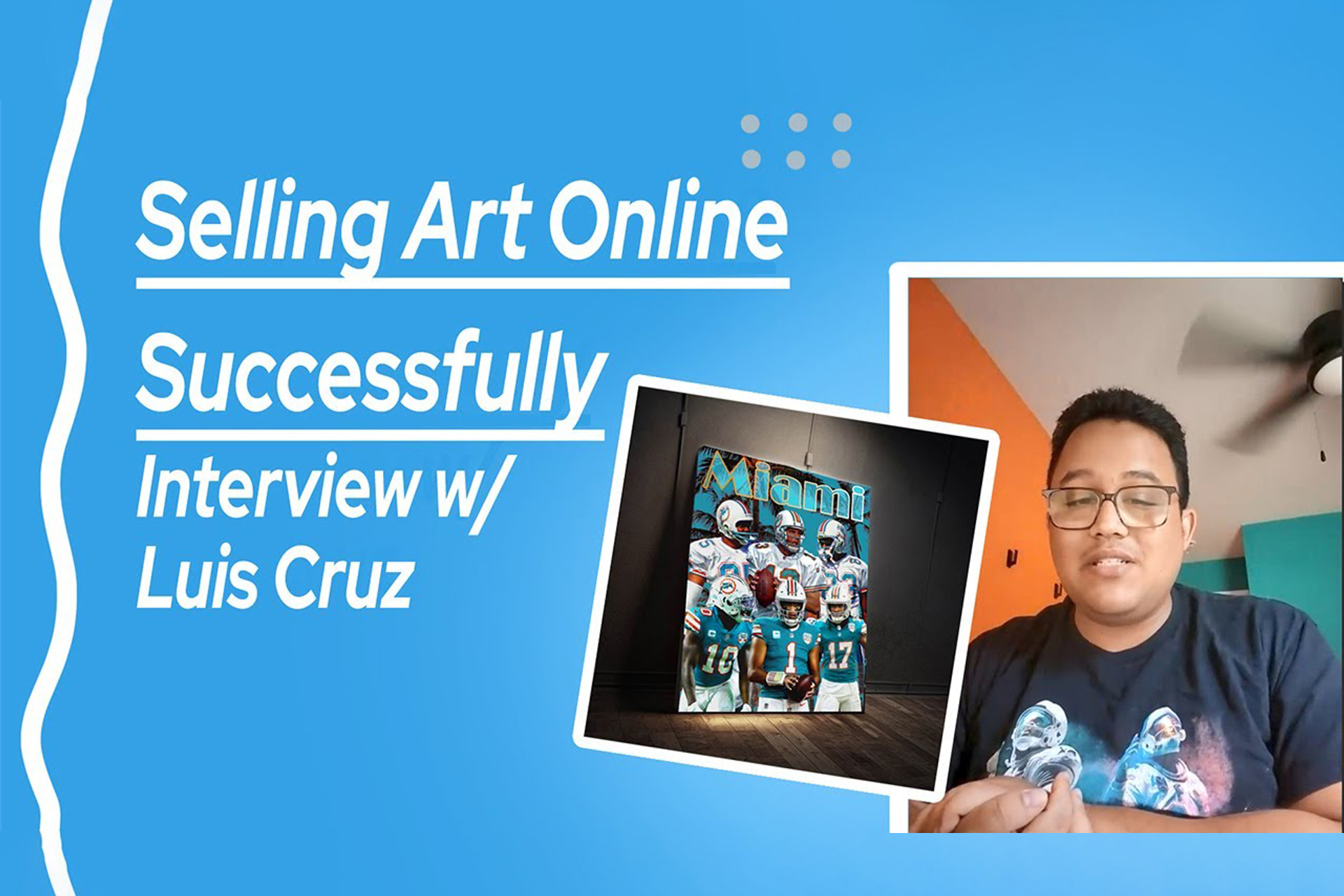
In this webinar, we sat down with South Carolina-based artist and business owner Luis Cruz, the artist behind “The Backroom Collection.” Luis sells prints of his work online and shares how he got started, how his art business developed, and what he has learned from dropshipping art prints and selling art prints online.
Watch the original webinar here: Online Store Dropshipping – Interview with Luis Cruz: Lumaprints Learning Series 16.
If you would rather read than watch, continue below for the written version. You can also jump to any section from the list.
The Artistic Beginnings
Luis Cruz’s path into art did not begin with a formal plan. He saw a Facebook acquaintance making money from canvases featuring sports imagery and started thinking about what he could do differently. He saw room for more creative choices, and what began as a way to earn extra income gradually became a serious part of his work.
Transitioning from Canva to Photoshop
Luis started out using Canva. As his ideas became more detailed, he realized he wanted more control over the way his artwork looked, so he moved to Adobe Photoshop.
The transition took work. Luis spent a lot of time watching tutorials and practicing, sometimes for hours at a time. Over time, he became faster and more comfortable with the software. The lesson is not that every artist needs Photoshop, but that learning your tools well can make it easier to turn an idea into the finished work you have in mind.
Niche Focus: Miami Sports Passion
A large part of Luis’s work comes from his interest in Miami sports. He creates a subject he already knows and enjoys, which gives him a better understanding of the people he is designing for. He researches players, their backgrounds, memorable moments, and details longtime fans are likely to notice.
That connection helps the artwork feel more specific instead of generic. For artists selling art prints online, a clear niche can also make design and marketing decisions easier because you know who you are trying to reach.
Customization Beyond Miami Sports
Miami sports may be Luis’s main focus, but it is not the only thing he creates. He also accepts custom requests and has an “All Things Not Miami” section for work outside his usual niche, including family portraits and other special projects.
This gives him room to serve different customers without changing the identity of his main collection.
The Power of Dropshipping
Luis talks openly about the importance of finding a printing partner you can trust. His first experience with another vendor was disappointing, which made the production side of the business harder than it needed to be. He later found Lumaprints and started using print-on-demand dropshipping as part of his workflow.
For artists, the value is simple. A reliable partner can handle printing, packing, and shipping after a customer places an order, leaving more time for creating, marketing, and working with customers.
If you are thinking about dropshipping art prints, price should not be the only thing you look at. Print quality, packaging, communication, and dependable fulfillment all affect the customer experience. Lumaprints’ gallery save feature also helped Luis make repeat orders easier to manage through his store.
The E-commerce Advantage
Luis has sold through different channels, including conventions and galleries, so his view of e-commerce comes from actually trying more than one approach. One of the biggest advantages of selling art prints online is that the store remains available after an event ends. People can continue discovering the work, browsing products, and placing orders at any time.
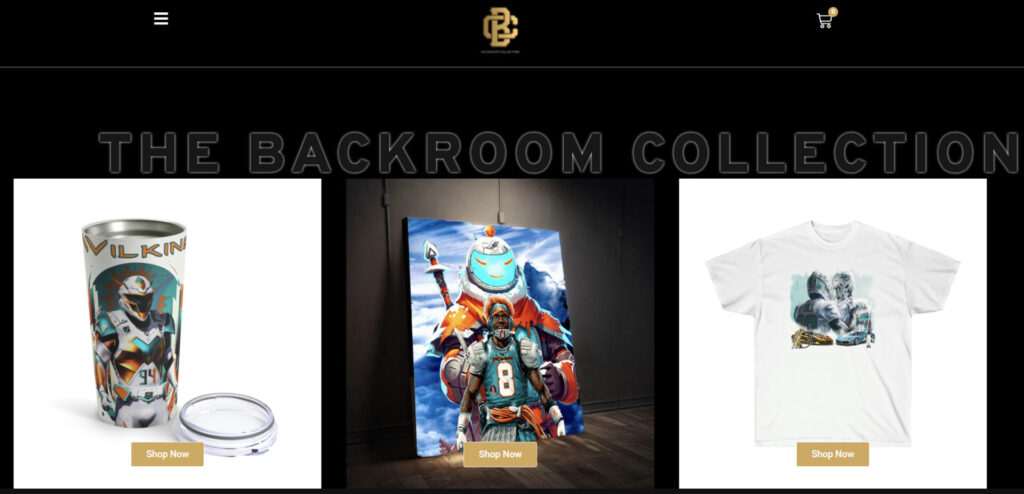
Luis also recommends considering whether one design can work across several products. On his site, the same artwork may appear on T-shirts, mugs, canvas prints, or other items when the design fits.
Art Shows and Conventions Experience
Online selling is only part of Luis’s experience. He has also attended sports autograph shows where athletes meet fans and sign memorabilia. Those events gave him a chance to put his work in front of people already interested in the same subject matter.
He also offered designs to vendors at a discounted price so they could sell them alongside other merchandise. This gave Luis more exposure and gave vendors another product to offer.
Key to Success: Understanding Your Audience
Luis believes knowing your audience is one of the most important parts of running an art business. He pays attention to customer feedback, talks with people on social media, and watches how different designs perform.
Some pieces connect immediately, and others do not. The useful part is noticing patterns in what people respond to, then using that information to decide where to spend more time.
Balancing Multiple Commitments
Luis also talks about something many working artists understand: there is rarely unlimited time. Alongside his art business, he has managed a full-time job, pastoral responsibilities, family, and other commitments.
Because of that, time management matters. He recommends focusing on what is already working, while print-on-demand can reduce the time spent on production, packing, and shipping.
Copyright and Legal Rights
During the webinar, Luis warned artists about using photographs without permission. In his own work, he explains that he obtains permission for certain images through agreements that may only allow him to use the material for a specific period.
Before using another person’s photograph commercially, make sure you understand what rights you actually have.
Artists looking for general information can review the U.S. Copyright Office, which provides guidance on copyright protection, ownership, and registration.
Build an Art Business That Works for You
Luis Cruz’s experience shows that an art business does not have to be built all at once. He improved his technical skills over time, focused on something he genuinely cared about, learned more about his audience, tried different ways of selling, and eventually found a production setup that fit the way he wanted to work.
For artists interested in dropshipping art prints, the useful lesson is to build around the parts of the business you do best. Spend your time creating, learning what customers respond to, and use reliable partners for the parts you do not need to handle personally.
If you’re interested in Luis Cruz’s work, you can find him here:
Twitter/X (@TheBackroomCol2)
Instagram (@thebackroomcollection)
Facebook (@backroomcollection)
Watch the complete discussion here: Online Store Dropshipping – Interview with Luis Cruz: Lumaprints Learning Series 16.
All previous and upcoming webinar videos are available on the Lumaprints YouTube Channel.
Frequently Asked Questions
What does dropshipping art prints mean?
It means a printing partner produces and ships the artwork after a customer places an order, so the artist does not need to keep finished prints in stock.
Is print-on-demand useful for artists?
It can be, especially for artists who want to sell prints without handling every part of production and shipping themselves.
Can I sell art prints online without keeping inventory?
Yes. With print-on-demand, the print is produced after the customer places an order rather than being stored ahead of time.
What should I look for in a printing partner?
Look at print quality, packaging, communication, available products, and how reliably orders are produced and shipped.
Do I need permission to use someone else’s photograph?
You may need permission or an appropriate license if you plan to use someone else’s copyrighted photography commercially. The exact rights depend on the image and how you intend to use it.




