
Customizing Your Mock-Up’s Background
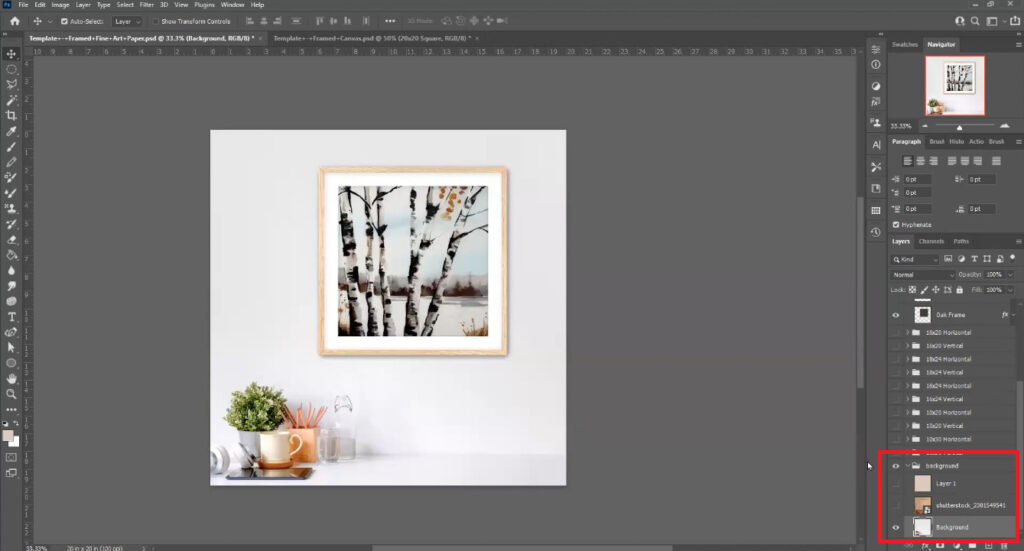
Feel free to customize backgrounds or explore options to match your artistic vision. Click on the Background folder and toggle on or off to choose the standard pre-added background.
Additional Information
- Showing different perspectives, including the sides and edges of a canvas print, can help customers get a better sense of its thickness. It is optional, but it can make the presentation more useful.
- If Photoshop is not available, you can also try alternatives such as Medibang, Gimp, or a one-time purchase program like Clip Studio Art. We also offer Canva mockups as well.
We hope this guide makes it easier to use Lumaprints’ art mockup templates for your own artwork. Once you understand how to use a mockup template, you can quickly create product previews for your online store, portfolio, or customer presentations without rebuilding the mock-up from scratch each time.
If you have questions or need help along the way, feel free to contact Lumaprints’ customer support or the webinar team.
Watch the full demonstration here: Mock-Up Templates and How to Use Them – Lumaprints Learning Series 15.
All previous and upcoming webinar videos are available on our YouTube channel: Lumaprints YouTube Channel.
Give your mock-up a title, such as the name of your artwork.
Congratulations! You’ve successfully created a mock-up of your artwork using Lumaprints’ templates. This process should take only a few minutes once you become familiar with it.
Customizing Your Mock-Up’s Background
Feel free to customize backgrounds or explore options to match your artistic vision. Click on the Background folder and toggle on or off to choose the standard pre-added background.
Additional Information
- Showing different perspectives, including the sides and edges of a canvas print, can help customers get a better sense of its thickness. It is optional, but it can make the presentation more useful.
- If Photoshop is not available, you can also try alternatives such as Medibang, Gimp, or a one-time purchase program like Clip Studio Art. We also offer Canva mockups as well.
We hope this guide makes it easier to use Lumaprints’ art mockup templates for your own artwork. Once you understand how to use a mockup template, you can quickly create product previews for your online store, portfolio, or customer presentations without rebuilding the mock-up from scratch each time.
If you have questions or need help along the way, feel free to contact Lumaprints’ customer support or the webinar team.
Watch the full demonstration here: Mock-Up Templates and How to Use Them – Lumaprints Learning Series 15.
All previous and upcoming webinar videos are available on our YouTube channel: Lumaprints YouTube Channel.
Saving Your Mock-Up
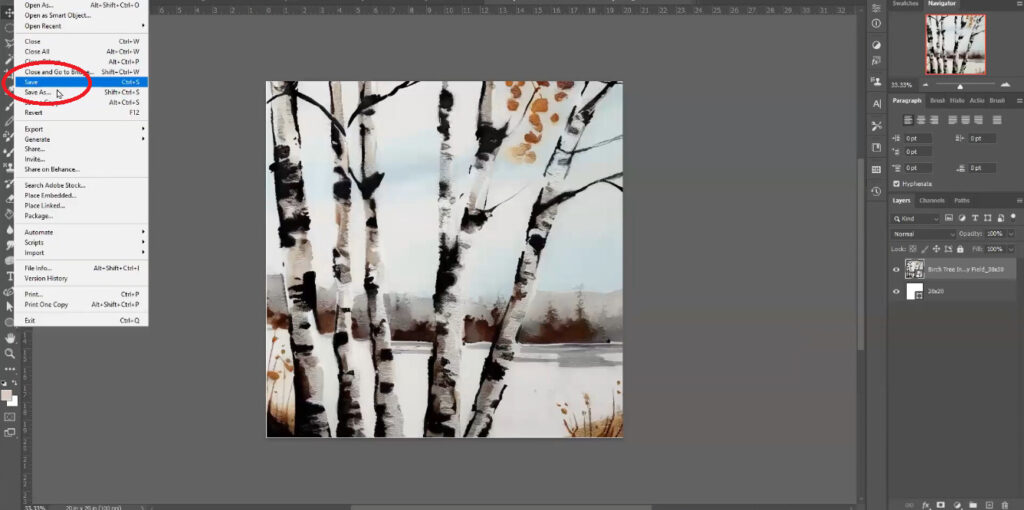
Save your mock-up by pressing “Ctrl + S” (or “Cmd + S” on Mac) to ensure your image is superimposed onto the canvas.
Give your mock-up a title, such as the name of your artwork.
Exporting Your Mock-Up
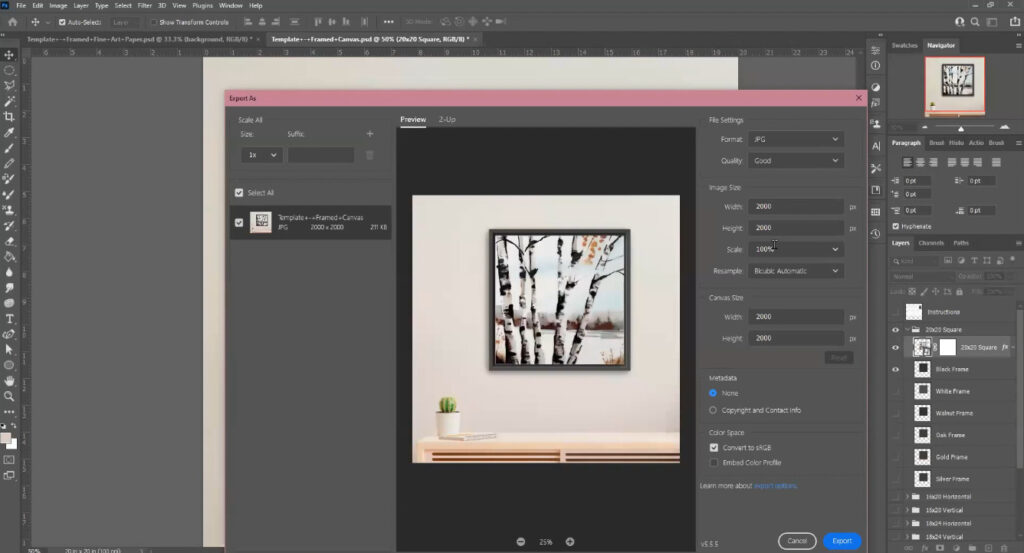
Export your finished mock-up as a JPEG or PNG depending on how you plan to use it. PNG is a good option for web use when you want to maintain image quality.
Give the mock-up a clear file name, such as the title of your artwork.
That’s it! Your artwork is now displayed in a Lumaprints mock-up template. Once you become familiar with the steps, creating another mock-up should only take a few minutes.
Give your mock-up a title, such as the name of your artwork.
Congratulations! You’ve successfully created a mock-up of your artwork using Lumaprints’ templates. This process should take only a few minutes once you become familiar with it.
Customizing Your Mock-Up’s Background
Feel free to customize backgrounds or explore options to match your artistic vision. Click on the Background folder and toggle on or off to choose the standard pre-added background.
Additional Information
- Showing different perspectives, including the sides and edges of a canvas print, can help customers get a better sense of its thickness. It is optional, but it can make the presentation more useful.
- If Photoshop is not available, you can also try alternatives such as Medibang, Gimp, or a one-time purchase program like Clip Studio Art. We also offer Canva mockups as well.
We hope this guide makes it easier to use Lumaprints’ art mockup templates for your own artwork. Once you understand how to use a mockup template, you can quickly create product previews for your online store, portfolio, or customer presentations without rebuilding the mock-up from scratch each time.
If you have questions or need help along the way, feel free to contact Lumaprints’ customer support or the webinar team.
Watch the full demonstration here: Mock-Up Templates and How to Use Them – Lumaprints Learning Series 15.
All previous and upcoming webinar videos are available on our YouTube channel: Lumaprints YouTube Channel.
Choosing Frames
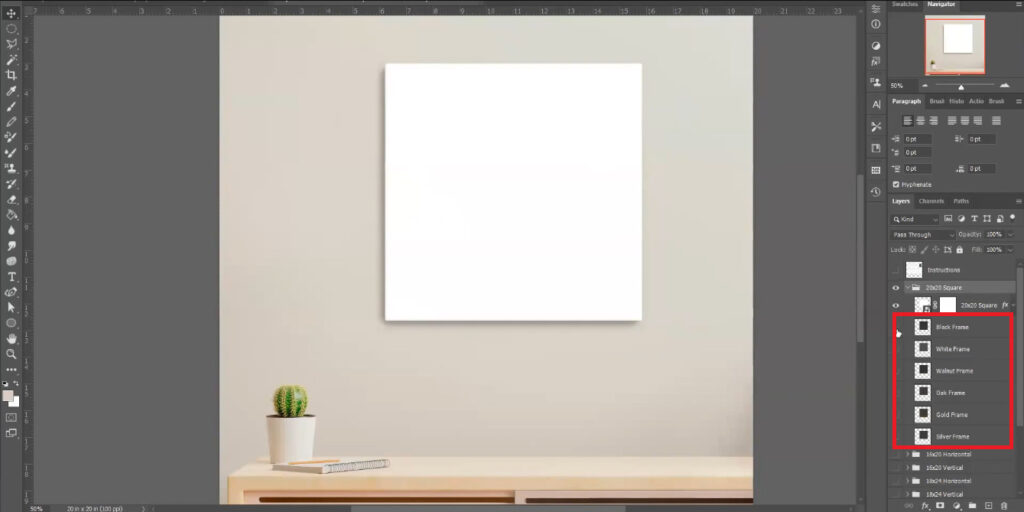
You can customize the mock-up by turning different frame options on or off depending on the look you want. With several frame styles available, it is easier to find one that fits your artwork and the way you want to present it.
Adding Your Artwork
To add your image, find the smart object inside the layer for your chosen canvas size.
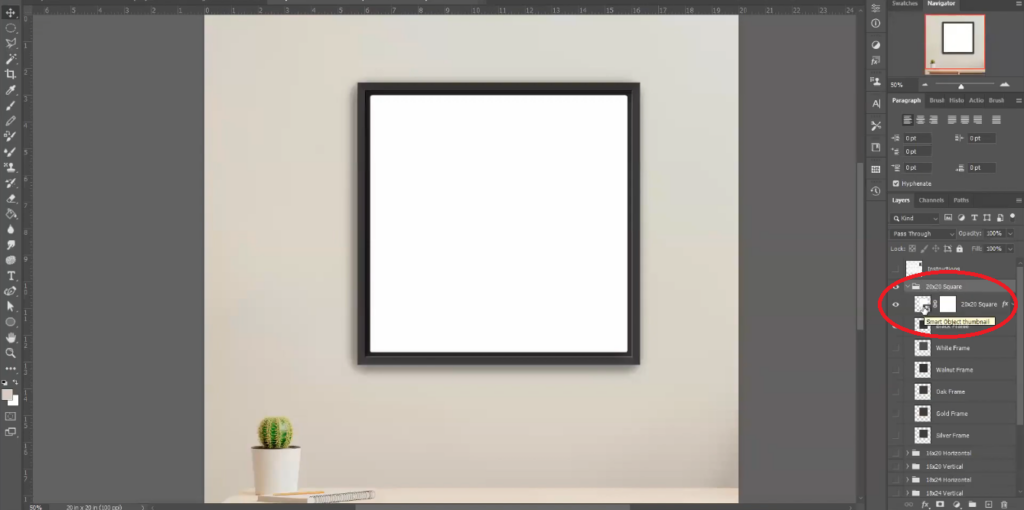
Double-click the smart object to open it, then add your artwork on the new page.
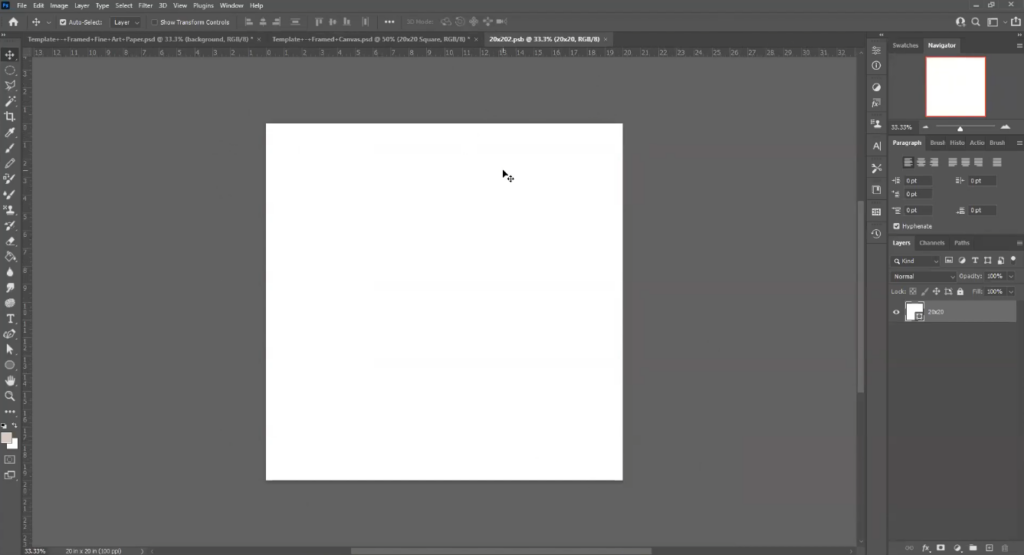
You can copy and paste, drag and drop, or use whichever method works best for adding your artwork to the canvas.
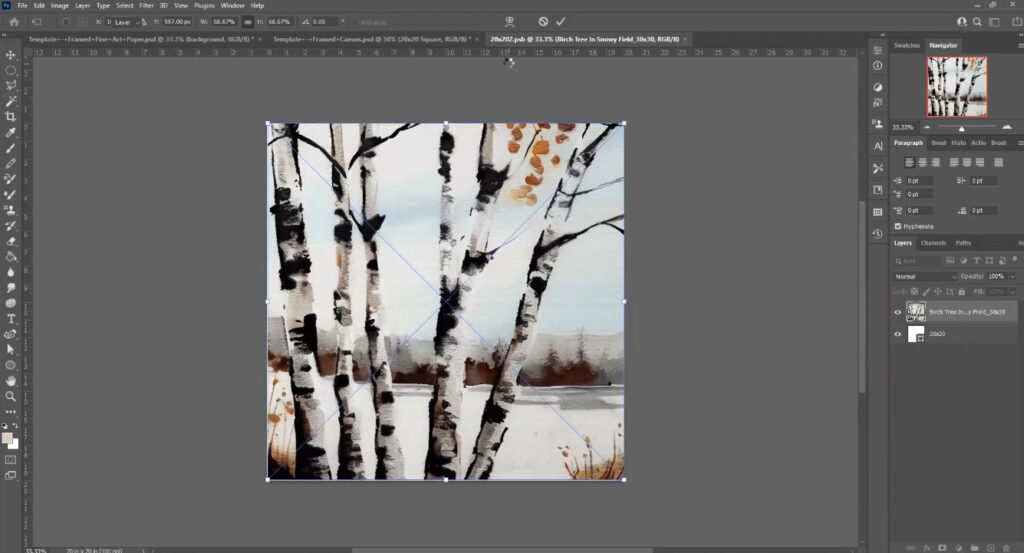
Position the artwork where you want it, making sure everything stays within the canvas area.
Saving Your Mock-Up
Save your mock-up by pressing “Ctrl + S” (or “Cmd + S” on Mac) to ensure your image is superimposed onto the canvas.
Give your mock-up a title, such as the name of your artwork.
Exporting Your Mock-Up
Export your finished mock-up as a JPEG or PNG depending on how you plan to use it. PNG is a good option for web use when you want to maintain image quality.
Give the mock-up a clear file name, such as the title of your artwork.
That’s it! Your artwork is now displayed in a Lumaprints mock-up template. Once you become familiar with the steps, creating another mock-up should only take a few minutes.
Give your mock-up a title, such as the name of your artwork.
Congratulations! You’ve successfully created a mock-up of your artwork using Lumaprints’ templates. This process should take only a few minutes once you become familiar with it.
Customizing Your Mock-Up’s Background
Feel free to customize backgrounds or explore options to match your artistic vision. Click on the Background folder and toggle on or off to choose the standard pre-added background.
Additional Information
- Showing different perspectives, including the sides and edges of a canvas print, can help customers get a better sense of its thickness. It is optional, but it can make the presentation more useful.
- If Photoshop is not available, you can also try alternatives such as Medibang, Gimp, or a one-time purchase program like Clip Studio Art. We also offer Canva mockups as well.
We hope this guide makes it easier to use Lumaprints’ art mockup templates for your own artwork. Once you understand how to use a mockup template, you can quickly create product previews for your online store, portfolio, or customer presentations without rebuilding the mock-up from scratch each time.
If you have questions or need help along the way, feel free to contact Lumaprints’ customer support or the webinar team.
Watch the full demonstration here: Mock-Up Templates and How to Use Them – Lumaprints Learning Series 15.
All previous and upcoming webinar videos are available on our YouTube channel: Lumaprints YouTube Channel.
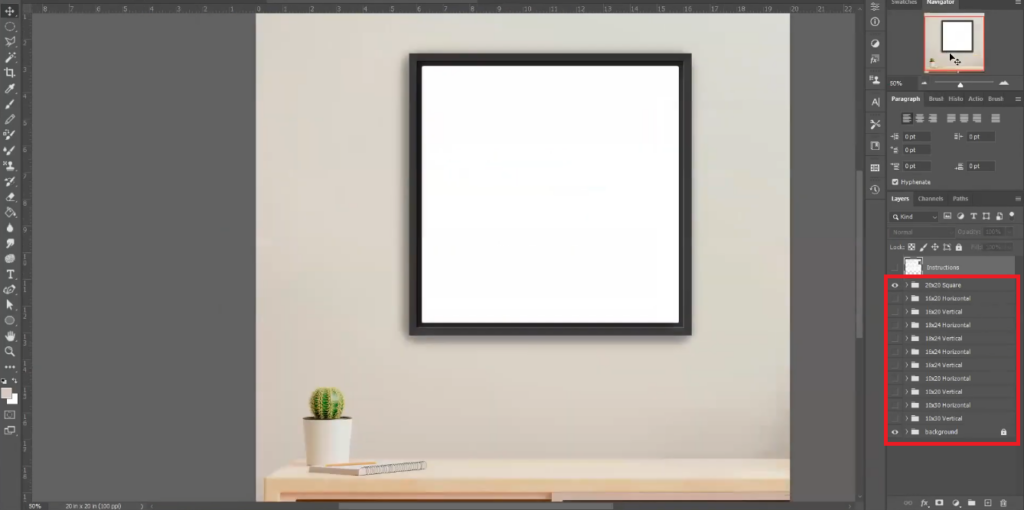
Choosing Frames
You can customize the mock-up by turning different frame options on or off depending on the look you want. With several frame styles available, it is easier to find one that fits your artwork and the way you want to present it.
Adding Your Artwork
To add your image, find the smart object inside the layer for your chosen canvas size.
Double-click the smart object to open it, then add your artwork on the new page.
You can copy and paste, drag and drop, or use whichever method works best for adding your artwork to the canvas.
Position the artwork where you want it, making sure everything stays within the canvas area.
Saving Your Mock-Up
Save your mock-up by pressing “Ctrl + S” (or “Cmd + S” on Mac) to ensure your image is superimposed onto the canvas.
Give your mock-up a title, such as the name of your artwork.
Exporting Your Mock-Up
Export your finished mock-up as a JPEG or PNG depending on how you plan to use it. PNG is a good option for web use when you want to maintain image quality.
Give the mock-up a clear file name, such as the title of your artwork.
That’s it! Your artwork is now displayed in a Lumaprints mock-up template. Once you become familiar with the steps, creating another mock-up should only take a few minutes.
Give your mock-up a title, such as the name of your artwork.
Congratulations! You’ve successfully created a mock-up of your artwork using Lumaprints’ templates. This process should take only a few minutes once you become familiar with it.
Customizing Your Mock-Up’s Background
Feel free to customize backgrounds or explore options to match your artistic vision. Click on the Background folder and toggle on or off to choose the standard pre-added background.
Additional Information
- Showing different perspectives, including the sides and edges of a canvas print, can help customers get a better sense of its thickness. It is optional, but it can make the presentation more useful.
- If Photoshop is not available, you can also try alternatives such as Medibang, Gimp, or a one-time purchase program like Clip Studio Art. We also offer Canva mockups as well.
We hope this guide makes it easier to use Lumaprints’ art mockup templates for your own artwork. Once you understand how to use a mockup template, you can quickly create product previews for your online store, portfolio, or customer presentations without rebuilding the mock-up from scratch each time.
If you have questions or need help along the way, feel free to contact Lumaprints’ customer support or the webinar team.
Watch the full demonstration here: Mock-Up Templates and How to Use Them – Lumaprints Learning Series 15.
All previous and upcoming webinar videos are available on our YouTube channel: Lumaprints YouTube Channel.
You can hide or toggle irrelevant pages and layers on and off as needed. This functionality is similar to other graphic editing programs.
Selecting Size
Choose the canvas size that works best with your artwork. The template includes popular sizes and ratios, from squares and rectangles to panoramic, large, and smaller formats.
Choosing Frames
You can customize the mock-up by turning different frame options on or off depending on the look you want. With several frame styles available, it is easier to find one that fits your artwork and the way you want to present it.
Adding Your Artwork
To add your image, find the smart object inside the layer for your chosen canvas size.
Double-click the smart object to open it, then add your artwork on the new page.
You can copy and paste, drag and drop, or use whichever method works best for adding your artwork to the canvas.
Position the artwork where you want it, making sure everything stays within the canvas area.
Saving Your Mock-Up
Save your mock-up by pressing “Ctrl + S” (or “Cmd + S” on Mac) to ensure your image is superimposed onto the canvas.
Give your mock-up a title, such as the name of your artwork.
Exporting Your Mock-Up
Export your finished mock-up as a JPEG or PNG depending on how you plan to use it. PNG is a good option for web use when you want to maintain image quality.
Give the mock-up a clear file name, such as the title of your artwork.
That’s it! Your artwork is now displayed in a Lumaprints mock-up template. Once you become familiar with the steps, creating another mock-up should only take a few minutes.
Give your mock-up a title, such as the name of your artwork.
Congratulations! You’ve successfully created a mock-up of your artwork using Lumaprints’ templates. This process should take only a few minutes once you become familiar with it.
Customizing Your Mock-Up’s Background
Feel free to customize backgrounds or explore options to match your artistic vision. Click on the Background folder and toggle on or off to choose the standard pre-added background.
Additional Information
- Showing different perspectives, including the sides and edges of a canvas print, can help customers get a better sense of its thickness. It is optional, but it can make the presentation more useful.
- If Photoshop is not available, you can also try alternatives such as Medibang, Gimp, or a one-time purchase program like Clip Studio Art. We also offer Canva mockups as well.
We hope this guide makes it easier to use Lumaprints’ art mockup templates for your own artwork. Once you understand how to use a mockup template, you can quickly create product previews for your online store, portfolio, or customer presentations without rebuilding the mock-up from scratch each time.
If you have questions or need help along the way, feel free to contact Lumaprints’ customer support or the webinar team.
Watch the full demonstration here: Mock-Up Templates and How to Use Them – Lumaprints Learning Series 15.
All previous and upcoming webinar videos are available on our YouTube channel: Lumaprints YouTube Channel.
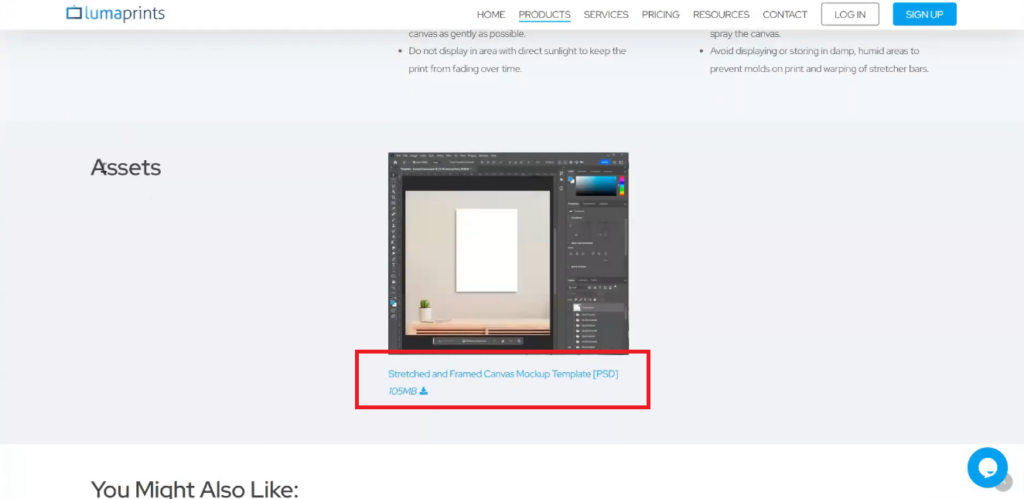
Working with the Mock-up Templates
Open the downloaded template file. Note that these files may be large and could take some time to open.
Instructions
Inside the template, you’ll find instructions on how to use it. You can navigate the template even without the video tutorial.
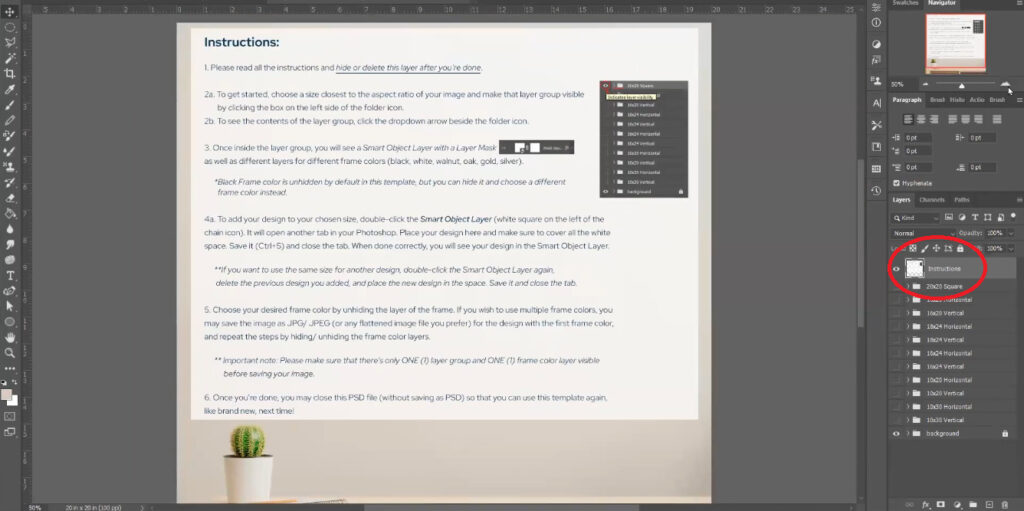
You can hide or toggle irrelevant pages and layers on and off as needed. This functionality is similar to other graphic editing programs.
Selecting Size
Choose the canvas size that works best with your artwork. The template includes popular sizes and ratios, from squares and rectangles to panoramic, large, and smaller formats.
Choosing Frames
You can customize the mock-up by turning different frame options on or off depending on the look you want. With several frame styles available, it is easier to find one that fits your artwork and the way you want to present it.
Adding Your Artwork
To add your image, find the smart object inside the layer for your chosen canvas size.
Double-click the smart object to open it, then add your artwork on the new page.
You can copy and paste, drag and drop, or use whichever method works best for adding your artwork to the canvas.
Position the artwork where you want it, making sure everything stays within the canvas area.
Saving Your Mock-Up
Save your mock-up by pressing “Ctrl + S” (or “Cmd + S” on Mac) to ensure your image is superimposed onto the canvas.
Give your mock-up a title, such as the name of your artwork.
Exporting Your Mock-Up
Export your finished mock-up as a JPEG or PNG depending on how you plan to use it. PNG is a good option for web use when you want to maintain image quality.
Give the mock-up a clear file name, such as the title of your artwork.
That’s it! Your artwork is now displayed in a Lumaprints mock-up template. Once you become familiar with the steps, creating another mock-up should only take a few minutes.
Give your mock-up a title, such as the name of your artwork.
Congratulations! You’ve successfully created a mock-up of your artwork using Lumaprints’ templates. This process should take only a few minutes once you become familiar with it.
Customizing Your Mock-Up’s Background
Feel free to customize backgrounds or explore options to match your artistic vision. Click on the Background folder and toggle on or off to choose the standard pre-added background.
Additional Information
- Showing different perspectives, including the sides and edges of a canvas print, can help customers get a better sense of its thickness. It is optional, but it can make the presentation more useful.
- If Photoshop is not available, you can also try alternatives such as Medibang, Gimp, or a one-time purchase program like Clip Studio Art. We also offer Canva mockups as well.
We hope this guide makes it easier to use Lumaprints’ art mockup templates for your own artwork. Once you understand how to use a mockup template, you can quickly create product previews for your online store, portfolio, or customer presentations without rebuilding the mock-up from scratch each time.
If you have questions or need help along the way, feel free to contact Lumaprints’ customer support or the webinar team.
Watch the full demonstration here: Mock-Up Templates and How to Use Them – Lumaprints Learning Series 15.
All previous and upcoming webinar videos are available on our YouTube channel: Lumaprints YouTube Channel.
Working with the Mock-up Templates
Open the downloaded template file. Note that these files may be large and could take some time to open.
Instructions
Inside the template, you’ll find instructions on how to use it. You can navigate the template even without the video tutorial.
You can hide or toggle irrelevant pages and layers on and off as needed. This functionality is similar to other graphic editing programs.
Selecting Size
Choose the canvas size that works best with your artwork. The template includes popular sizes and ratios, from squares and rectangles to panoramic, large, and smaller formats.
Choosing Frames
You can customize the mock-up by turning different frame options on or off depending on the look you want. With several frame styles available, it is easier to find one that fits your artwork and the way you want to present it.
Adding Your Artwork
To add your image, find the smart object inside the layer for your chosen canvas size.
Double-click the smart object to open it, then add your artwork on the new page.
You can copy and paste, drag and drop, or use whichever method works best for adding your artwork to the canvas.
Position the artwork where you want it, making sure everything stays within the canvas area.
Saving Your Mock-Up
Save your mock-up by pressing “Ctrl + S” (or “Cmd + S” on Mac) to ensure your image is superimposed onto the canvas.
Give your mock-up a title, such as the name of your artwork.
Exporting Your Mock-Up
Export your finished mock-up as a JPEG or PNG depending on how you plan to use it. PNG is a good option for web use when you want to maintain image quality.
Give the mock-up a clear file name, such as the title of your artwork.
That’s it! Your artwork is now displayed in a Lumaprints mock-up template. Once you become familiar with the steps, creating another mock-up should only take a few minutes.
Give your mock-up a title, such as the name of your artwork.
Congratulations! You’ve successfully created a mock-up of your artwork using Lumaprints’ templates. This process should take only a few minutes once you become familiar with it.
Customizing Your Mock-Up’s Background
Feel free to customize backgrounds or explore options to match your artistic vision. Click on the Background folder and toggle on or off to choose the standard pre-added background.
Additional Information
- Showing different perspectives, including the sides and edges of a canvas print, can help customers get a better sense of its thickness. It is optional, but it can make the presentation more useful.
- If Photoshop is not available, you can also try alternatives such as Medibang, Gimp, or a one-time purchase program like Clip Studio Art. We also offer Canva mockups as well.
We hope this guide makes it easier to use Lumaprints’ art mockup templates for your own artwork. Once you understand how to use a mockup template, you can quickly create product previews for your online store, portfolio, or customer presentations without rebuilding the mock-up from scratch each time.
If you have questions or need help along the way, feel free to contact Lumaprints’ customer support or the webinar team.
Watch the full demonstration here: Mock-Up Templates and How to Use Them – Lumaprints Learning Series 15.
All previous and upcoming webinar videos are available on our YouTube channel: Lumaprints YouTube Channel.
Locate and download the mock-up template for your chosen product type. These templates are available for stretched and framed canvas prints and fine art paper prints.
Working with the Mock-up Templates
Open the downloaded template file. Note that these files may be large and could take some time to open.
Instructions
Inside the template, you’ll find instructions on how to use it. You can navigate the template even without the video tutorial.
You can hide or toggle irrelevant pages and layers on and off as needed. This functionality is similar to other graphic editing programs.
Selecting Size
Choose the canvas size that works best with your artwork. The template includes popular sizes and ratios, from squares and rectangles to panoramic, large, and smaller formats.
Choosing Frames
You can customize the mock-up by turning different frame options on or off depending on the look you want. With several frame styles available, it is easier to find one that fits your artwork and the way you want to present it.
Adding Your Artwork
To add your image, find the smart object inside the layer for your chosen canvas size.
Double-click the smart object to open it, then add your artwork on the new page.
You can copy and paste, drag and drop, or use whichever method works best for adding your artwork to the canvas.
Position the artwork where you want it, making sure everything stays within the canvas area.
Saving Your Mock-Up
Save your mock-up by pressing “Ctrl + S” (or “Cmd + S” on Mac) to ensure your image is superimposed onto the canvas.
Give your mock-up a title, such as the name of your artwork.
Exporting Your Mock-Up
Export your finished mock-up as a JPEG or PNG depending on how you plan to use it. PNG is a good option for web use when you want to maintain image quality.
Give the mock-up a clear file name, such as the title of your artwork.
That’s it! Your artwork is now displayed in a Lumaprints mock-up template. Once you become familiar with the steps, creating another mock-up should only take a few minutes.
Give your mock-up a title, such as the name of your artwork.
Congratulations! You’ve successfully created a mock-up of your artwork using Lumaprints’ templates. This process should take only a few minutes once you become familiar with it.
Customizing Your Mock-Up’s Background
Feel free to customize backgrounds or explore options to match your artistic vision. Click on the Background folder and toggle on or off to choose the standard pre-added background.
Additional Information
- Showing different perspectives, including the sides and edges of a canvas print, can help customers get a better sense of its thickness. It is optional, but it can make the presentation more useful.
- If Photoshop is not available, you can also try alternatives such as Medibang, Gimp, or a one-time purchase program like Clip Studio Art. We also offer Canva mockups as well.
We hope this guide makes it easier to use Lumaprints’ art mockup templates for your own artwork. Once you understand how to use a mockup template, you can quickly create product previews for your online store, portfolio, or customer presentations without rebuilding the mock-up from scratch each time.
If you have questions or need help along the way, feel free to contact Lumaprints’ customer support or the webinar team.
Watch the full demonstration here: Mock-Up Templates and How to Use Them – Lumaprints Learning Series 15.
All previous and upcoming webinar videos are available on our YouTube channel: Lumaprints YouTube Channel.
Scroll down to the bottom of the page to find the “Assets” section.
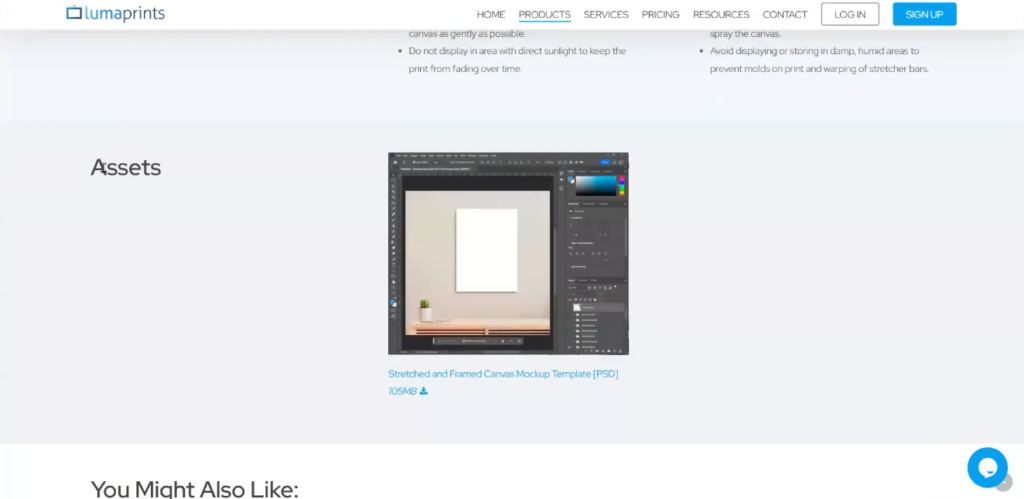
Locate and download the mock-up template for your chosen product type. These templates are available for stretched and framed canvas prints and fine art paper prints.
Working with the Mock-up Templates
Open the downloaded template file. Note that these files may be large and could take some time to open.
Instructions
Inside the template, you’ll find instructions on how to use it. You can navigate the template even without the video tutorial.
You can hide or toggle irrelevant pages and layers on and off as needed. This functionality is similar to other graphic editing programs.
Selecting Size
Choose the canvas size that works best with your artwork. The template includes popular sizes and ratios, from squares and rectangles to panoramic, large, and smaller formats.
Choosing Frames
You can customize the mock-up by turning different frame options on or off depending on the look you want. With several frame styles available, it is easier to find one that fits your artwork and the way you want to present it.
Adding Your Artwork
To add your image, find the smart object inside the layer for your chosen canvas size.
Double-click the smart object to open it, then add your artwork on the new page.
You can copy and paste, drag and drop, or use whichever method works best for adding your artwork to the canvas.
Position the artwork where you want it, making sure everything stays within the canvas area.
Saving Your Mock-Up
Save your mock-up by pressing “Ctrl + S” (or “Cmd + S” on Mac) to ensure your image is superimposed onto the canvas.
Give your mock-up a title, such as the name of your artwork.
Exporting Your Mock-Up
Export your finished mock-up as a JPEG or PNG depending on how you plan to use it. PNG is a good option for web use when you want to maintain image quality.
Give the mock-up a clear file name, such as the title of your artwork.
That’s it! Your artwork is now displayed in a Lumaprints mock-up template. Once you become familiar with the steps, creating another mock-up should only take a few minutes.
Give your mock-up a title, such as the name of your artwork.
Congratulations! You’ve successfully created a mock-up of your artwork using Lumaprints’ templates. This process should take only a few minutes once you become familiar with it.
Customizing Your Mock-Up’s Background
Feel free to customize backgrounds or explore options to match your artistic vision. Click on the Background folder and toggle on or off to choose the standard pre-added background.
Additional Information
- Showing different perspectives, including the sides and edges of a canvas print, can help customers get a better sense of its thickness. It is optional, but it can make the presentation more useful.
- If Photoshop is not available, you can also try alternatives such as Medibang, Gimp, or a one-time purchase program like Clip Studio Art. We also offer Canva mockups as well.
We hope this guide makes it easier to use Lumaprints’ art mockup templates for your own artwork. Once you understand how to use a mockup template, you can quickly create product previews for your online store, portfolio, or customer presentations without rebuilding the mock-up from scratch each time.
If you have questions or need help along the way, feel free to contact Lumaprints’ customer support or the webinar team.
Watch the full demonstration here: Mock-Up Templates and How to Use Them – Lumaprints Learning Series 15.
All previous and upcoming webinar videos are available on our YouTube channel: Lumaprints YouTube Channel.
Welcome to Lumaprints Webinar 15! In this step-by-step guide, we’ll show you how to use art mockup templates to preview and present your artwork on Lumaprints products. If you’re learning how to use a mockup template, this walkthrough will help you understand the process from choosing a product and size to adding your artwork and preparing the finished mock-up.
Mock-up templates give you a better idea of how your artwork may look on the finished product before placing an order. They can also be useful when preparing product images for your website, portfolio, or online store.
Watch the original webinar here: Mock-Up Templates and How to Use Them – Lumaprints Learning Series 15.
If you like reading more than watching, we’ve got you. Read on for all the instructions. You can also jump to any topic you want from the list below.
Accessing Mock-Up Templates
Lumaprints has art mockup templates available on the website for several print products. Before getting started, make sure you have editing software installed. Photoshop is the standard option, but you can also use alternatives such as Medibang or Clip Studio Art as long as they support PSD files and multiple layers. This article discusses Photoshop mockups, but we also have Canva mock up templates now available for those who do not have an editing software.
Visit the Lumaprints website and click Products in the top navigation. From there, choose the type of product you want to create a mock-up for, such as canvas prints, fine art paper prints, or framed canvas prints.
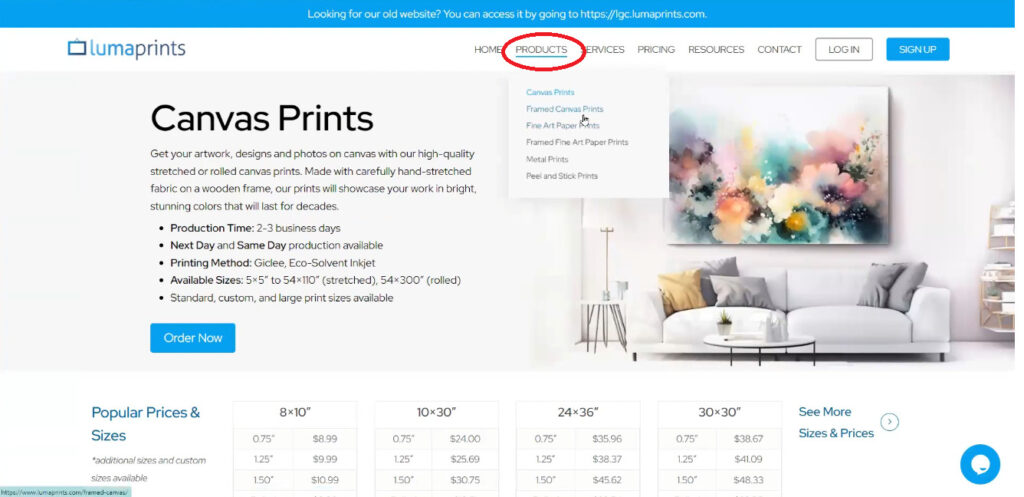
Scroll down to the bottom of the page to find the “Assets” section.
Locate and download the mock-up template for your chosen product type. These templates are available for stretched and framed canvas prints and fine art paper prints.
Working with the Mock-up Templates
Open the downloaded template file. Note that these files may be large and could take some time to open.
Instructions
Inside the template, you’ll find instructions on how to use it. You can navigate the template even without the video tutorial.
You can hide or toggle irrelevant pages and layers on and off as needed. This functionality is similar to other graphic editing programs.
Selecting Size
Choose the canvas size that works best with your artwork. The template includes popular sizes and ratios, from squares and rectangles to panoramic, large, and smaller formats.
Choosing Frames
You can customize the mock-up by turning different frame options on or off depending on the look you want. With several frame styles available, it is easier to find one that fits your artwork and the way you want to present it.
Adding Your Artwork
To add your image, find the smart object inside the layer for your chosen canvas size.
Double-click the smart object to open it, then add your artwork on the new page.
You can copy and paste, drag and drop, or use whichever method works best for adding your artwork to the canvas.
Position the artwork where you want it, making sure everything stays within the canvas area.
Saving Your Mock-Up
Save your mock-up by pressing “Ctrl + S” (or “Cmd + S” on Mac) to ensure your image is superimposed onto the canvas.
Give your mock-up a title, such as the name of your artwork.
Exporting Your Mock-Up
Export your finished mock-up as a JPEG or PNG depending on how you plan to use it. PNG is a good option for web use when you want to maintain image quality.
Give the mock-up a clear file name, such as the title of your artwork.
That’s it! Your artwork is now displayed in a Lumaprints mock-up template. Once you become familiar with the steps, creating another mock-up should only take a few minutes.
Give your mock-up a title, such as the name of your artwork.
Congratulations! You’ve successfully created a mock-up of your artwork using Lumaprints’ templates. This process should take only a few minutes once you become familiar with it.
Customizing Your Mock-Up’s Background
Feel free to customize backgrounds or explore options to match your artistic vision. Click on the Background folder and toggle on or off to choose the standard pre-added background.
Additional Information
- Showing different perspectives, including the sides and edges of a canvas print, can help customers get a better sense of its thickness. It is optional, but it can make the presentation more useful.
- If Photoshop is not available, you can also try alternatives such as Medibang, Gimp, or a one-time purchase program like Clip Studio Art. We also offer Canva mockups as well.
We hope this guide makes it easier to use Lumaprints’ art mockup templates for your own artwork. Once you understand how to use a mockup template, you can quickly create product previews for your online store, portfolio, or customer presentations without rebuilding the mock-up from scratch each time.
If you have questions or need help along the way, feel free to contact Lumaprints’ customer support or the webinar team.
Watch the full demonstration here: Mock-Up Templates and How to Use Them – Lumaprints Learning Series 15.
All previous and upcoming webinar videos are available on our YouTube channel: Lumaprints YouTube Channel.



I would love to start using Lumaprints for canvas and paper prints on my website. Will Lumaprints also include canva for mockup options? I do not have an adobe subscription. I have tried several times in the past and find it is a really hard program to use. Canva is a lot easier. I have been hoping for months this would become an option. I finally decided to ask.
Thank you,
Jeanne
Hi Jeanna,
Thanks for commenting on our post and sharing your feedback! We understand that Canva is more accessible and a user-friendly tool. We’re going to add your request to our pipeline of assets, and we’ll share it with everyone once it is available.
Best,
Lumaprints Marketing